CM-205FN Paint Thickness Gauge Review: Spot Repaints Before You Overpay


CM-205FN Paint Thickness Gauge Review: Spot Repaints Before You Overpay
CM-205FN Paint Thickness Gauge
Buy if you're a used car buyer, detailer, or body shop pro needing an affordable way to detect repaints and body filler. Skip if you need plastic or carbon fiber support, or require professional-grade accuracy.
Buy on AmazonWhat We Liked
- Accurate Right Out of the Box
- Easy to Use with Clear Readings
- Auto Metal Detection
- Quick and Simple Calibration
- Budget-Friendly Professional Tool
What Could Be Better
- No Plastic or Carbon Fiber Support
- Occasional Reading Variations
- No Data Storage
How we test: Every product is used in real conditions and evaluated using our standardized scoring criteria. Read our full review methodology.
Buying a used car is nerve-wracking enough without worrying if that “one-owner, never been in an accident” story is actually true. The VVV-Group CM-205FN Paint Thickness Gauge gives you a way to verify those claims before you hand over your money.
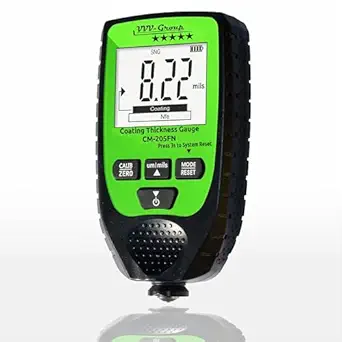
I tested this coating thickness meter on calibration plates and my own car to see if it could reliably detect repaints and body filler. The gauge measures paint thickness from 0 to 1500 microns (0 to 59.1 mils) and automatically detects whether you’re measuring on steel or aluminum surfaces.
The verdict? For under $50, this paint thickness gauge delivers accurate readings right out of the box. Factory paint typically ranges from 4 to 7 mils, and my car’s readings landed squarely in that range. It’s not a lab-grade instrument, but for used car buyers, detailers, and body shop pros who need an affordable way to spot repaints, the CM-205FN earns its place in your toolkit.
What I Liked
Accurate Right Out of the Box
The CM-205FN surprised me with its accuracy without needing calibration first. I placed the 39.4 mil calibration foil on the ferrous metal plate and got exactly 39.4 mils. That’s the kind of precision you’d expect from instruments costing three times as much.
When I moved to testing on my actual car, the readings made sense too. I got measurements between 4.74 and 5.97 mils across different panels, all falling within the typical factory paint range. The gauge uses a resolution of 0.1 microns (0.01 mil), so you can detect even small differences between panels.
Easy to Use with Clear Readings
The large 2.2-inch backlit LCD display makes readings easy to see, even in dim garages. There’s no squinting at tiny numbers or guessing what the meter is telling you. The display shows your measurement in large characters along with the substrate type (FE for ferrous metals, NF for non-ferrous).
The controls are straightforward too. Power on, press the probe against the surface, wait for the beep, and read your measurement. The device fits comfortably in your palm, and the large buttons work even with gloves on.
Auto Metal Detection
I appreciated not having to manually switch between ferrous and non-ferrous modes. The CM-205FN automatically recognizes whether you’re measuring on steel, iron, or aluminum and adjusts its measurement method accordingly.
For checking cars, this matters because modern vehicles often use aluminum hoods and trunk lids to save weight. The automatic detection means you can move quickly from panel to panel without worrying about settings.
Quick and Simple Calibration
While the gauge works well out of the box, the included calibration kit lets you fine-tune accuracy when needed. The kit includes ferrous and aluminum plates plus five calibration foils at different thicknesses.
The calibration process takes just seconds. Press the calibration button, adjust to match your foil thickness, and confirm. I found that recalibrating helped when switching between measurement units or after extended use.
Budget-Friendly Professional Tool
At around $50, the CM-205FN costs a fraction of professional paint thickness gauges that run $500 or more. For used car buyers making occasional purchases, detailers, or body shop inspections, this price point makes paint thickness measurement accessible.
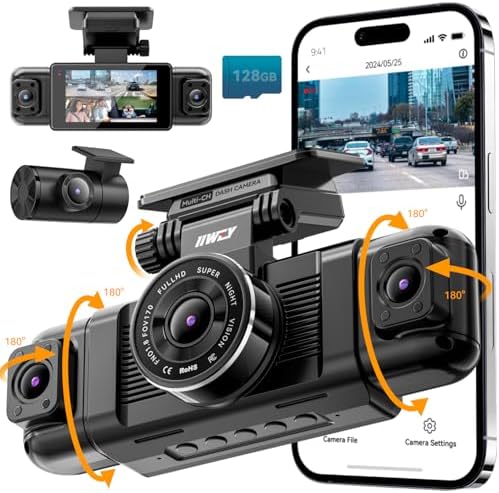
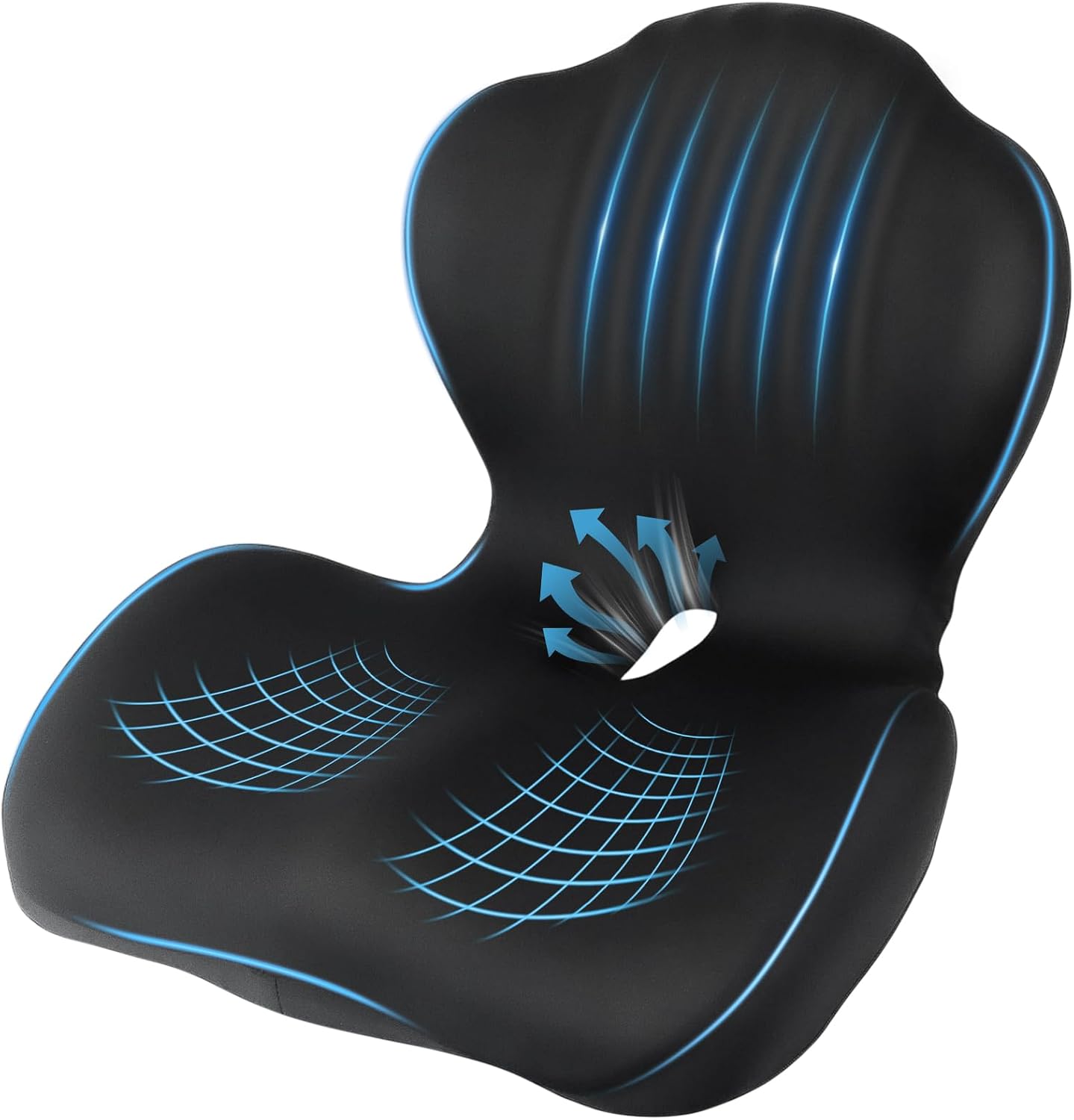
The gauge comes with everything you need: the meter itself, calibration plates, calibration foils, carrying case, batteries, and user manual. No additional purchases required. Drivers worried about getting sideswiped in traffic might also want the IIWEY N5 4 Channel Dash Cam on hand to back up an inspection like this one with footage from every angle. Buyers who spend long stretches test-driving cars before committing might also appreciate the Nisuez Car Seat Cushion for the lower-back support those hours on the road demand.
What Needs Improvement
No Plastic or Carbon Fiber Support
The CM-205FN only works on metal surfaces. If you’re checking a car with plastic bumpers, carbon fiber trim, or fiberglass body panels, you’ll get no reading at all. This is a fundamental limitation of the magnetic induction and eddy current measurement technology.
For most vehicles with traditional metal body panels, this isn’t an issue. But if you’re shopping for sports cars with carbon fiber components or vehicles with extensive plastic cladding, you’ll have blind spots in your inspection.
Occasional Reading Variations
Some users report that readings can vary when measuring the same spot multiple times. In my testing, I noticed deviations of a few hundredths of a mil when repositioning the probe. Keeping consistent pressure and angle helps minimize this, but it’s something to be aware of.
The gauge isn’t a lab-grade instrument, and its ±3% accuracy specification reflects this. For detecting obvious repaints that add several mils of thickness, this variation is negligible. For precision industrial coating work, you’d want a more expensive instrument.
No Data Storage
Unlike some higher-priced gauges, the CM-205FN doesn’t store measurements or let you transfer data to a computer. Every reading you take needs to be manually recorded or memorized.
For casual users checking a car or two, this isn’t a big deal. But if you’re doing professional inspections across multiple vehicles and need documentation, you’ll be reaching for a notepad or smartphone to log your readings.
How It Compares
The CM-205FN sits at the budget end of the paint thickness gauge market. Understanding where it fits helps you decide if it’s enough for your needs.
Extech CG204 ($100-150): The CG204 stores up to 400 readings and offers more robust calibration options. If you need to document inspections or compare measurements across multiple vehicles, the data storage alone justifies the extra $50-100. However, if you just need quick readings to spot obvious repaints, the CM-205FN does that job for less.
DeFelsko PosiTector 6000 ($500+): This is the professional benchmark. DeFelsko gauges offer wireless connectivity, extensive data logging, interchangeable probes, and proven long-term accuracy. For body shops doing daily inspections or insurance adjusters who need bulletproof documentation, it’s worth the investment. For occasional used car purchases, it’s overkill.
KAIWEETS KC1 ($80): Testing shows the KC1 delivers comparable accuracy to the CM-205FN at a similar price point. The KC1 adds a color screen and more calibration modes. If those features matter to you, consider spending the extra $30. Otherwise, the CM-205FN handles the core job equally well.
The bottom line: the CM-205FN is your entry point into paint thickness measurement. It does the essential job accurately. If you find yourself needing data storage, better documentation, or professional-grade reliability, you’ll know it’s time to upgrade.
Final Verdict
The CM-205FN Paint Thickness Gauge earns a 4.1 out of 5 rating. It does exactly what most buyers need: accurately detect repaints and body filler on metal car panels at a price that doesn’t break the bank.
Is it perfect? No. You can’t measure plastic or carbon fiber, there’s no data storage, and readings can vary slightly between measurements. But for under $50, you get a gauge that’s accurate out of the box, easy to use, and includes everything you need to start inspecting vehicles immediately.
If you’re buying used cars, detailing vehicles, or running a body shop, the CM-205FN gives you the data you need to make informed decisions. It won’t replace professional-grade equipment for industrial applications, but it’s a solid starting point that pays for itself the first time it helps you avoid a secretly repainted car.
Specifications
| Brand | VVV-Group |
| Material | Fe/Al |
| Item dimensions L x W x H | 4.33 x 2.09 x 0.91 inches |
| Item Weight | 500 Grams |
| Manufacturer | VVV-Group |
Frequently Asked Questions
How accurate is the CM-205FN paint thickness gauge?
The CM-205FN has a stated accuracy of ±3% and resolution of 0.1 microns (0.01 mil). In my testing, readings on calibration foils matched the labeled values exactly or within a few hundredths of a mil. For detecting repaints that typically add 3-5+ mils of thickness, this accuracy is more than sufficient.
Does the CM-205FN work on aluminum?
Yes. The gauge automatically detects whether you're measuring on ferrous metals (steel, iron) or non-ferrous metals (aluminum, copper) and uses the appropriate measurement method. The display shows "FE" for ferrous and "NF" for non-ferrous to confirm what it detected.
Can a paint thickness gauge detect rust?
Not directly. A paint thickness gauge measures the coating on top of the metal, not the metal condition underneath. However, if you see unusually thick readings in specific areas, it could indicate body filler used to cover rust damage during a repair.
How do you calibrate the CM-205FN?
The gauge comes factory-calibrated and works accurately out of the box. For fine-tuning, place a calibration foil on the included metal plate, press the probe down, press the calibration button, and adjust the reading to match the foil's labeled thickness. Press calibrate again to confirm.
What is a normal paint thickness reading for a car?
Factory automotive paint typically measures between 4 and 7 mils (100-180 microns). Readings significantly above this range often indicate a repaint with additional clear coat layers. Readings below this range might suggest thin factory paint or previous polishing that removed material.
Ready to Buy?
CM-205FN Paint Thickness Gauge delivers on its promises. If it fits your needs, it's a solid choice you won't regret.
Check Price on Amazon Founder & Product Reviewer at TheReviewRewind
Daniel has tested 400+ products across 20+ categories through hands-on, real-world testing. Every review includes video documentation and standardized scoring criteria. His reviews appear as Amazon shoppable videos and here on TheReviewRewind.
We earn a commission if you make a purchase, at no extra cost to you. This does not influence our ratings or recommendations. Full disclosure
Looking for more options? See all our Automotive Parts & Accessories reviews.