Comfytemp Red Light Therapy Belt Review: At-Home Pain Relief That Actually Wraps Where It Hurts


Comfytemp Red Light Therapy Belt Review: At-Home Pain Relief That Actually Wraps Where It Hurts
Comfytemp Red Light Therapy Belt
Buy if you want an affordable, wraparound red light therapy belt for targeted back, joint, and muscle relief at home. Skip if you need cordless freedom or expect a cure for serious chronic pain.
Buy on AmazonWhat We Liked
- Wraparound Design That Targets Any Sore Spot
- Dual 660nm and 850nm Wavelengths
- The Built-In Warmth
- Genuinely Easy to Use
- Lightweight and Comfortable to Wear
What Could Be Better
- It Has to Stay Plugged In
- The Cord Could Be Longer
- The 20-Minute Timer Can't Be Extended
- The Infrared Light Is Hard to See
How we test: Every product is used in real conditions and evaluated using our standardized scoring criteria. Read our full review methodology.
If you deal with back soreness, achy knees, or joints that stiffen up after a long day at a desk, you’ve probably looked into red light therapy. The catch is that spa sessions get expensive fast, and most at-home panels just sit on a stand pointing at one spot.
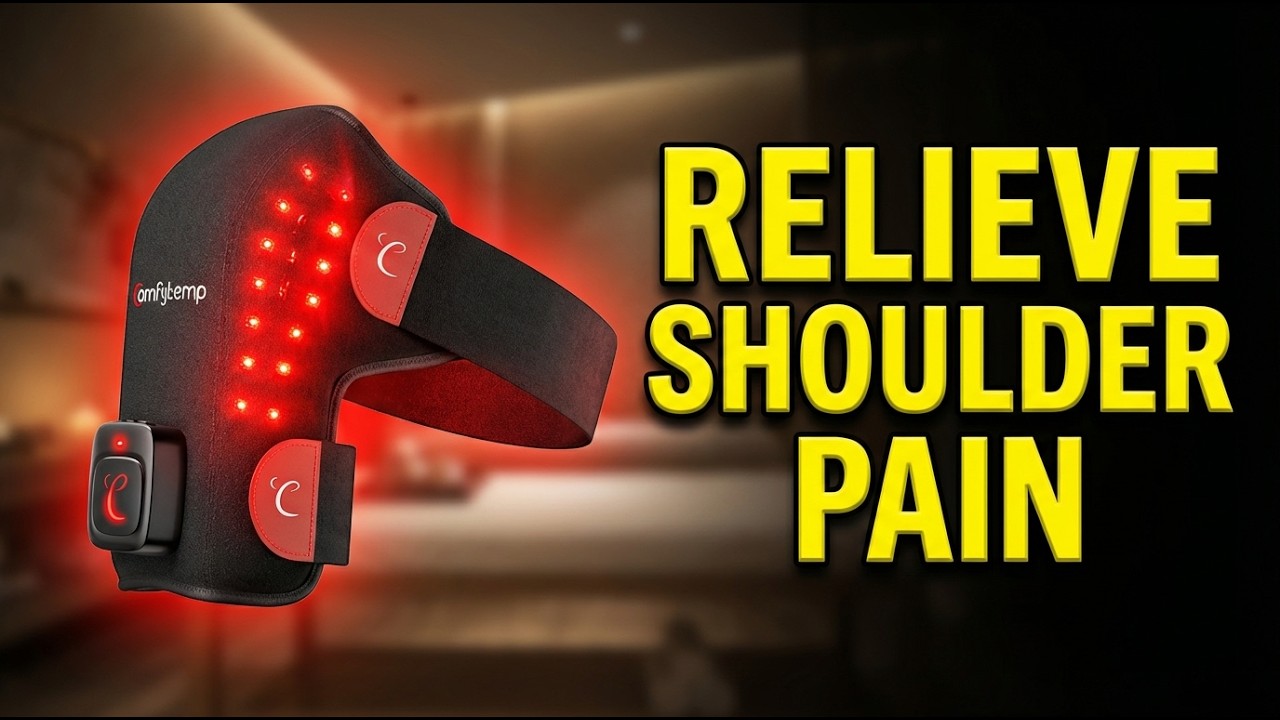
The Comfytemp Red Light Therapy Belt takes a different approach. Instead of a fixed panel, it wraps right around wherever it hurts, whether that’s your lower back, a knee, a shoulder, or even your stomach.
I’ve been using red light therapy for years to manage soreness from training five to six days a week, so I went in with a clear idea of what a good belt should do. I strapped this Comfytemp red light belt on for real recovery sessions in front of the TV and at my desk over several weeks.
This review covers the key features, how it performs, and who it’s actually for, including the good and the not-so-good.
How the Comfytemp Red Light Belt Works
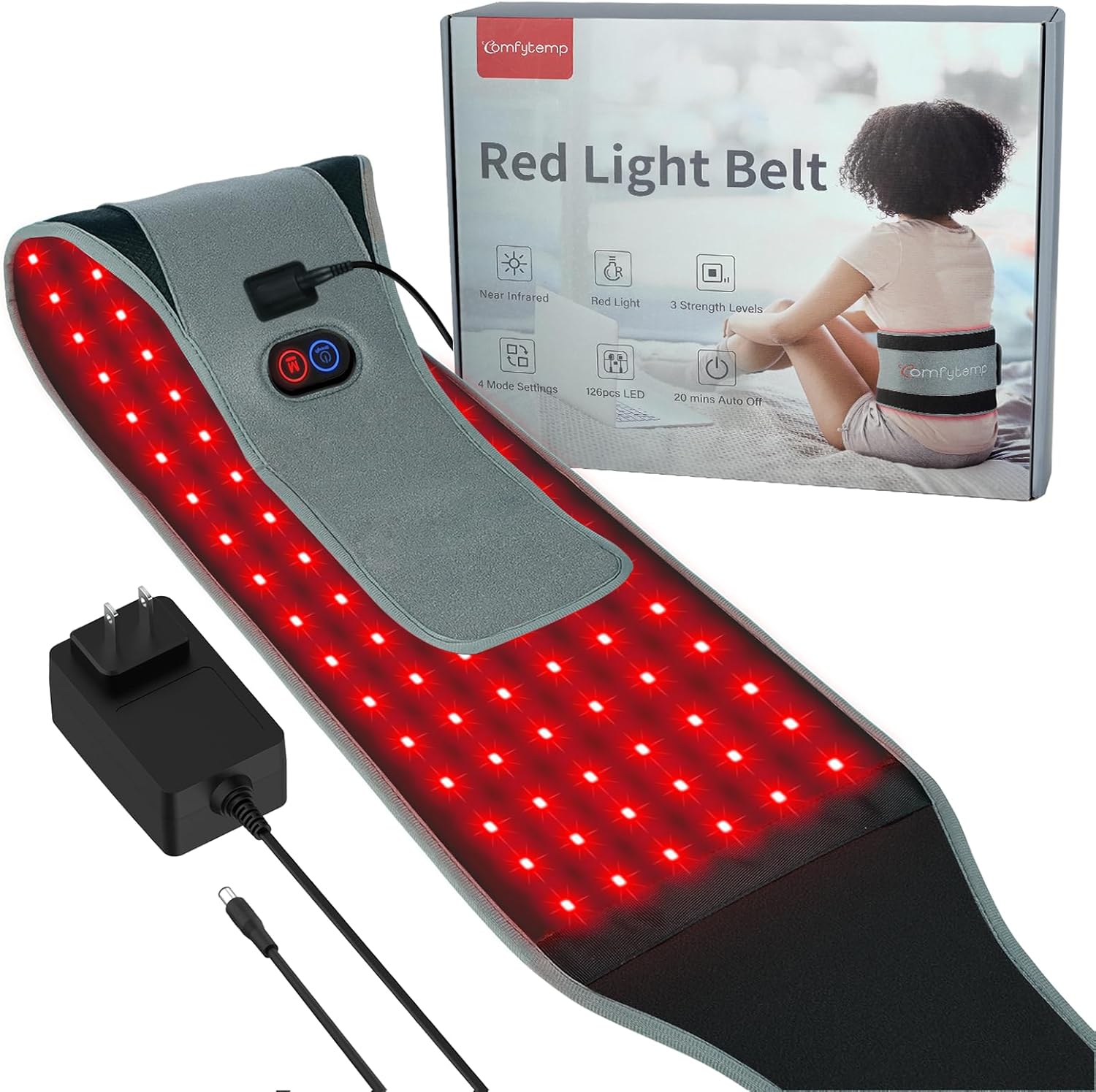
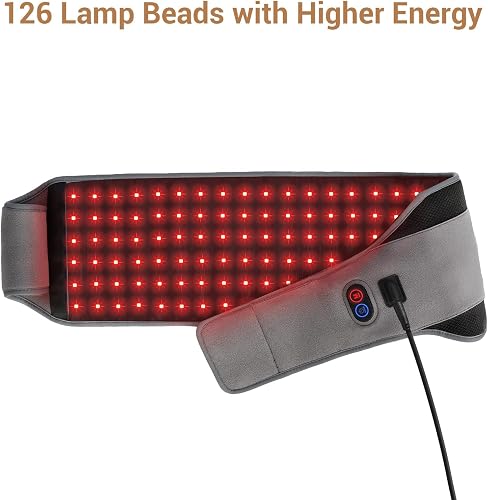
The panel packs 126 LEDs, and each of these beads is a light-emitting diode holding two chips: one emits 660nm red light and the other 850nm near infrared light. In other words, it combines 660nm red light and 850nm near-infrared light, so the visible red light works closer to the surface of the skin while the invisible infrared reaches deeper into muscle and joint tissue.
The idea behind red light therapy is that this light gives your cells’ mitochondria more energy to do their job, which can support recovery, ease back pain, and help soothe sore areas. As a light therapy device it’s essentially low-level laser therapy in a wearable light wrap, and this kind of infrared light therapy has a growing body of research behind it.
You get four modes, covering red plus infrared, infrared only, red only, and a pulsing mode, plus three brightness levels, all controlled by buttons on the belt itself for easy home or office use. A built-in timer runs each session for 20 minutes, and unlike many cordless red light belts, this one plugs into a wall outlet for steady, consistent power.
What I Liked
Wraparound Design That Targets Any Sore Spot
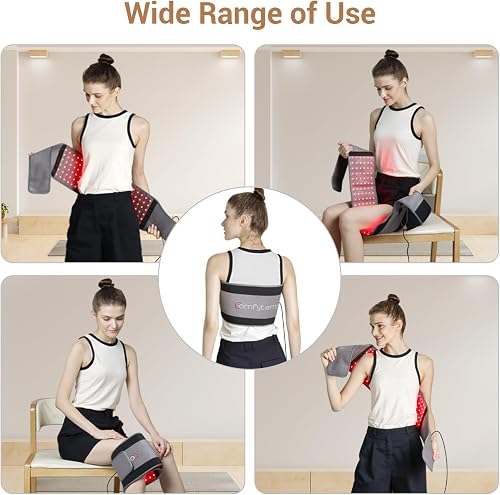
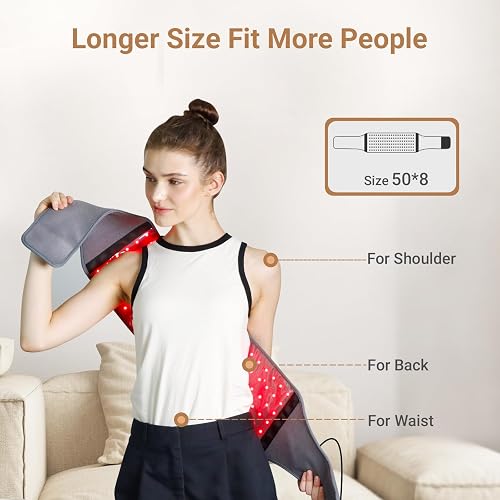
The wraparound design is the Comfytemp belt’s biggest advantage over a fixed panel. At about 50 inches long with a strong Velcro strap, it cinches down tight around your lower back, waist, a knee, a shoulder, or even an ankle.
One device covers every sore spot instead of buying a separate gadget for each. The lit area measures a generous 22 by 8 inches, so it blankets a wide zone in a single session. For a knee specifically, the LTW Knee Massager contours to the joint rather than blanketing it, and layers heat and vibration alongside the same dual wavelengths.
Dual 660nm and 850nm Wavelengths
Each of the LED beads pairs 660nm red light with 850nm near infrared light. That dual output means you cover surface-level skin and deeper muscle tissue at the same time, which usually takes two separate devices.
In practice I keep both wavelengths running together, since that combination feels the most effective for pain relief. Having dedicated infrared-only and red-only modes is a nice bonus when you want to focus on one or the other.
The Built-In Warmth
Here’s the part I didn’t expect to enjoy: the panel gives off a gentle warmth, a little like sunlight through a window. It never gets hot, and a clear plastic layer sits between the beads and your skin, so nothing warm touches you directly.
That low heat adds a genuine layer of relaxation and makes the whole session feel more soothing than a cold panel ever could. It’s the kind of detail that makes you actually want to use the belt.
Genuinely Easy to Use
Operation is refreshingly simple. Color-coded buttons on the belt let you see which mode and brightness level you’re on at a glance, so you strap it on, press a button, and it handles the rest.
The built-in timer shuts things off automatically, which means you can wrap it on at your desk and keep working without watching a clock. There’s no app, no pairing, and no learning curve.
Lightweight and Comfortable to Wear
At roughly a pound and a half and only about a quarter inch thick, the belt is light enough that wearing it around your back on the couch never feels like a chore. The padding is soft without feeling flimsy.
The Velcro holds firmly no matter how tight you cinch it, and the whole wrap contours to your body. It’s comfortable enough that I forget I have it on partway through a session.
What Needs Improvement
It Has to Stay Plugged In
The Comfytemp belt is corded, so you have to stay near a wall outlet for the entire session. That’s a fair trade for consistent power, since a lot of cheaper cordless belts simply don’t push enough light to be effective.
Still, it does tie you to one spot. If you want to walk around during treatment, this isn’t the belt for that.
The Cord Could Be Longer
While the cord is a reasonable length, it could stand to be longer. On the couch or at a desk it’s a non-issue, but reaching a comfortable outlet occasionally takes some planning.
Doubling the length would make the belt noticeably more flexible to position around the room.
The 20-Minute Timer Can’t Be Extended
The auto shut-off is locked to 20 minutes, and there’s no way to extend it in a single run. A typical session runs about that long anyway, so most people won’t mind.
If you do want to keep going, you have to power it off and back on to restart the timer. The belt also doesn’t remember your last mode, so it resets to the lowest setting each time you turn it on.
The Infrared Light Is Hard to See
Because the 850nm near infrared light is invisible to the eye, it’s easy to worry the belt isn’t working when you’re in infrared-only mode. You essentially have to check it in a dark room to confirm the beads are still active.
A small status indicator would remove the guesswork entirely. It’s a minor annoyance, but a common source of confusion in customer reviews.
How It Compares
At around $35 on Amazon, the Comfytemp Red Light Therapy Belt undercuts most of the wraps I’ve looked at, and that price is a big part of its appeal. Here’s how it stacks up against the alternatives.
Comfytemp Belt vs Hooga Red Light Therapy Belt
The Hooga Red Light Therapy Belt is cordless, running off a battery so you can move around freely, and reviewers at Wareable measured a strong output of roughly 70mW/cm² across its 660nm and 850nm beads. The trade-off is price, as the Hooga costs considerably more.
If untethered use matters most, the Hooga wins. If you mainly recover sitting still, the Comfytemp delivers similar wavelengths for a fraction of the cost.
Comfytemp Belt vs LifePro AllevaRed
Garage Gym Reviews named the LifePro AllevaRed its best red light therapy wrap with a 4.2 score, praising its 8-to-43-inch adjustable circumference and lifetime warranty. However, their testers flagged that several customers had the belt malfunction within a year and struggled to reach support.
The Comfytemp doesn’t promise a lifetime warranty, but its far lower price makes it an easier gamble if you’re new to red light therapy.
Comfytemp Belt vs a Fixed Panel or Pad
Compared with a stationary panel, the wrap format is simply more versatile for targeted pain relief, since you point the light exactly at the joint that hurts. If you want more flat surface area for home use, Comfytemp also sells a red light therapy pad, and that Comfytemp red light pad works as a larger light therapy pad for back and waist coverage, essentially a red light pad for back and belly zones.
Neither of those contours around a knee or elbow the way the belt does, though. With its steady 850nm infrared light, think of this belt as a heating pad that treats sore tissue and supports pain management instead of just warming it. Comfytemp applies the same wraparound thinking higher up its lineup with the Comfytemp Cordless Red Light Therapy Shoulder Wrap, a cordless option for anyone whose pain sits in the neck and shoulders. If you want vibration and adjustable heat layered on top of that same red light for the lower back, the ADIUPUL Cordless Back Massager Belt offers a cordless take built around the lumbar region.
Final Verdict
After putting the Comfytemp Red Light Therapy Belt through real recovery sessions, it’s an easy one to recommend for the money. The wraparound design makes it far more useful than a fixed panel, the dual 660nm and 850nm wavelengths cover both skin and deeper muscle, and the gentle built-in warmth turns each session into genuine relaxation.
It isn’t flawless. The cord keeps you near an outlet, the 20-minute timer can’t be extended, and the invisible infrared mode leaves you guessing. None of that is a dealbreaker at this price.
Set your expectations correctly. This is a recovery tool for everyday aches and soreness, not a cure for serious chronic pain, and you’ll need to use it consistently to feel results.
On that basis, the Comfytemp red light belt earns a 4.3 out of 5 and a spot in my regular recovery routine. For at-home red light therapy and dependable pain relief without the spa price tag, it’s a smart, low-risk pick.
Specifications
| manufacturer | Comfytemp |
| product_dimensions | 50 x 8 x 1.5 inches; 1.46 pounds |
| Light Wavelengths | 660nm red & 850nm near infrared |
| LED Beads | 126 dual-chip beads |
| Power | 22W (corded) |
| Coverage Area | 22 x 8 inches |
| Modes | 4 modes, 3 brightness levels |
| Timer | 20-minute auto shut-off |
| ASIN | B0D6GHY88X |
Frequently Asked Questions
Is the Comfytemp Red Light Therapy Belt legit?
Yes, it is a genuine 660nm and 850nm red light device with 126 dual-chip LED beads, and its roughly 4.6-star average from over 1,300 Amazon ratings backs that up. It won't work miracles, but the wavelengths and build are legitimate for at-home recovery.
Does the Comfytemp red light therapy belt actually work for pain?
In my testing it helped ease everyday back and muscle soreness, and many users report similar relief. The key is consistency, since you need to use it most days rather than once a week, and it works best as part of a broader recovery routine.
Why do the lights on the Comfytemp belt look off in infrared mode?
The 850nm near infrared light is invisible to the human eye, so the belt can appear off even when it's working. Check it in a dark room and you'll see a faint glow confirming the infrared beads are active.
Is the Comfytemp Red Light Therapy Belt corded or cordless?
This model is corded and plugs into a wall outlet, which keeps the light output strong and consistent. You'll need to stay near an outlet during a session, so plan your setup on a couch or at a desk.
How long is a session with the Comfytemp red light belt?
The built-in timer runs each session for 20 minutes and then shuts off automatically. It can't be extended in one go, so if you want longer you simply power it off and back on to start a fresh 20-minute cycle.
Ready to Buy?
Comfytemp Red Light Therapy Belt delivers on its promises. If it fits your needs, it's a solid choice you won't regret.
Check Price on Amazon Founder & Product Reviewer at TheReviewRewind
Daniel has tested 400+ products across 20+ categories through hands-on, real-world testing. Every review includes video documentation and standardized scoring criteria. His reviews appear as Amazon shoppable videos and here on TheReviewRewind.
We earn a commission if you make a purchase, at no extra cost to you. This does not influence our ratings or recommendations. Full disclosure
Looking for more options? See all our Health & Household reviews.
Related Reviews