LEGLO Small Rubber Mallet Hammer Review: A Mini Double-Faced Tool for Delicate Work


LEGLO Small Rubber Mallet Hammer Review: A Mini Double-Faced Tool for Delicate Work
LEGLO Small Rubber Mallet Hammer
Buy if you do delicate work like jewelry, crafts, tile, or furniture assembly and want a light, non-marring mallet with replaceable heads. Skip if you need a full-size mallet for long flooring runs, framing, or demolition.
Buy on AmazonWhat We Liked
- Two Non-Marring Faces Cover Most Delicate Jobs
- Light Enough for Precise, One-Handed Control
- Replaceable Heads Add Real Durability
- Quiet Enough for Late-Night Work
- Genuinely Versatile Across Crafts and DIY
What Could Be Better
- Light-Duty by Design
- Black Rubber Can Leave Faint Marks
- The Compact Head Cannot Reach Everything
- It Bounces Instead of Dampening
How we test: Every product is used in real conditions and evaluated using our standardized scoring criteria. Read our full review methodology.
Grab a regular metal hammer for something delicate, like tapping a tile into place, nudging furniture together, or seating a bead, and you already know how it ends. One tap too hard and you have left a dent, a scratch, or a little crescent ding you cannot undo.
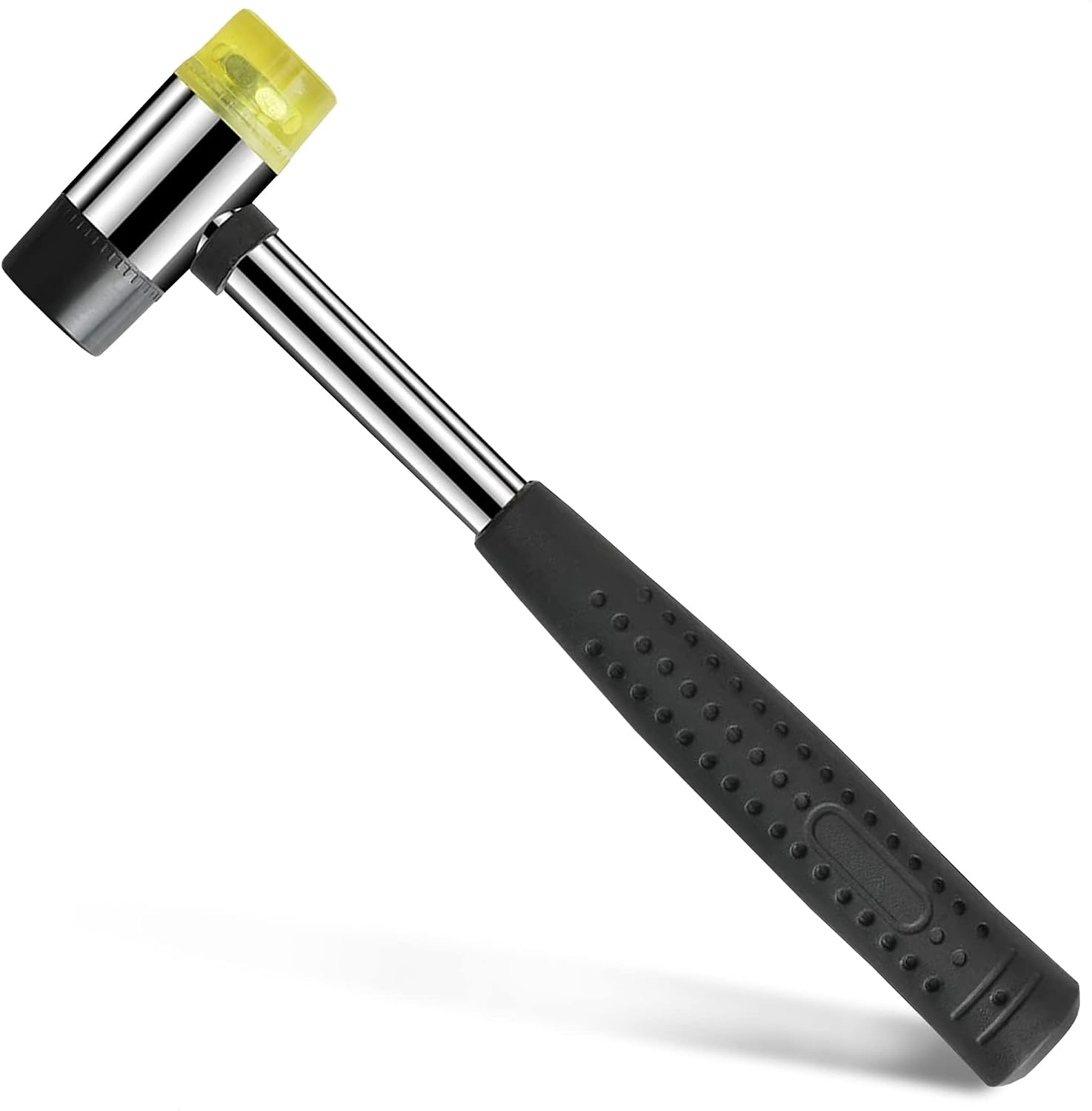
The LEGLO Small Rubber Mallet Hammer is built to solve exactly that. It is a compact, double-faced soft mallet with a rubber head on one side and a firmer plastic and nylon head on the other, all wrapped around a stainless steel shaft with a non-slip ergonomic grip. At about 9.5 inches long and 180 grams, this is a drawer tool, not a heavy workshop investment.
I put both faces of this rubber mallet hammer to work on tile, furniture assembly, and small craft jobs to see whether a sub-$7 mini mallet actually earns a spot in a toolbox. The short answer? For delicate, close-in work it does one job and does it well, though there are a couple of things worth knowing before you buy.
What I Liked
After tapping this little mallet through tile, furniture, and a few craft jobs, a handful of strengths stood out. Here is what the LEGLO does well.
Two Non-Marring Faces Cover Most Delicate Jobs
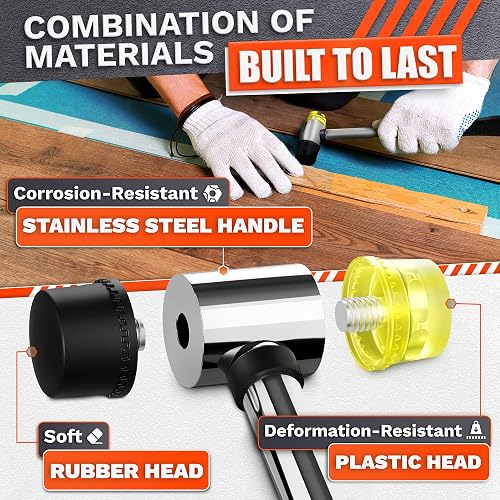
The whole point of this small rubber mallet hammer tool is right in the head. One side is a soft natural rubber head that absorbs the blow so you can seat something without leaving a mark, and the other is a firmer plastic and nylon face for when the rubber is too soft for the job. Among the mallet features that matter, this double-faced rubber mallet design is the one you feel every time you use a rubber mallet on delicate stock.
That pairing means one mallet handles both delicate work and slightly tougher taps. You can drive a tile right up to its edge without chipping it, or push a stubborn flat-pack joint home, and the soft faces give you the force without the damage. Where a normal metal hammer risks a dent or a bright crescent scratch, this one just taps. Crafters who reach for this mallet on delicate assemblies often work across mixed media, where the Tudomro African Cotton Fabric Squares add 100 vibrant prints for quilting and DIY projects.
Light Enough for Precise, One-Handed Control
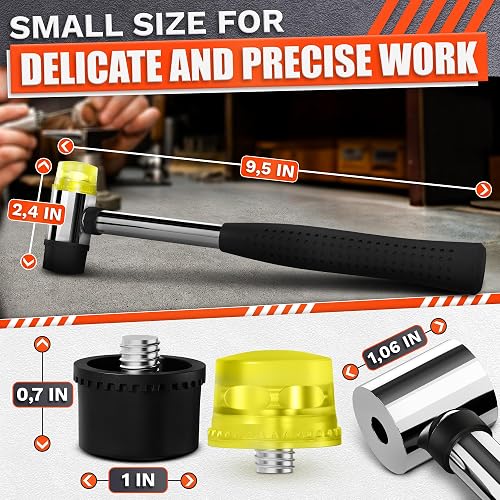
At roughly 180 grams, or about 6 ounces, and 9.5 inches long, this mallet is a fraction of the weight of a normal claw hammer. That is the feature, not a compromise. You are not muscling a heavy head around, so your hand does not tire even after a long session and you get precise little taps instead of big swings.
The stainless steel shaft and the non-slip ergonomic grip help here too. It is a genuinely comfortable grip, and even with slightly sweaty or damp hands the non-slip grip stayed planted, which matters for the close, fiddly work this tool is made for. For the opposite end of that range, LEGLO’s 24 oz rubber mallet hammer trades this fine control for 1.5 pounds of head weight aimed at pavers, tile, and 3/4-inch hardwood.
Replaceable Heads Add Real Durability
Here is the feature I did not expect: both heads unscrew. When a rubber or plastic face finally wears down after enough use, you swap in a fresh one instead of buying a whole new mallet. Crafters who want that same longevity from their supplies get it in the YOMELA 200pcs Motivational Quote Stickers, a waterproof vinyl pack that peels back off clean rather than tearing apart.
That small design choice changes how you think about durability. This is not a throwaway rubber mallet hammer where a chewed-up mallet head sends the entire tool to the bin. Swapping a face took seconds in my testing, unscrewing one side and threading the replacement back on. The same crafters who value that lasting durability tend to keep small embellishments on hand, like the Greentime 1500pcs Resin Buttons for scrapbooking and holiday decorating.
Quiet Enough for Late-Night Work
Because the rubber face soaks up the impact, this mallet barely makes a sound. You can hang a picture, tap trim into place, or nudge furniture together late in the evening without the sharp thud of a metal hammer waking the baby or annoying the neighbors. Renters and anyone working in a quiet house will appreciate that.
Genuinely Versatile Across Crafts and DIY
For such a simple tool, the range of jobs is wide. It suits jewelry making, woodworking, and delicate craft assembly, and buyers on Amazon mention it for gunsmith and guitar fret work where a metal face would dent everything.
One owner said their husband uses it on guitar frets that need a slight tap, and another called it great for setting brass rivets. It is even gentle enough to coax a dovetail joint together without bruising the wood.
It also earns its keep around the house: seating tile, light flooring taps, furniture assembly, and small automotive or repair jobs. It even doubles as a gentle nudge for a chisel on soft work. It is the kind of tool a carpenter or crafter keeps within reach and grabs far more often than expected.
What Needs Improvement
No tool is perfect, and going small brings real trade-offs. These are the areas where the LEGLO shows its limits.
Light-Duty by Design
This is a mini mallet, and it behaves like one. If you are framing a wall, doing demolition, or driving big nails all day, this is not the tool, and it never pretends to be. The light 180-gram head that makes it so controllable for delicate work also caps how much force it can deliver.
For heavy carpentry or serious persuasion, you want a full-size rubber mallet or a proper dead-blow hammer. Think of this as the drawer tool you reach for between the big jobs, not a replacement for them.
Black Rubber Can Leave Faint Marks
The soft face here is black rubber, and on very light or porous surfaces a black rubber head can occasionally transfer a faint scuff. It is a known quirk of the material rather than a defect specific to LEGLO. As one r/Tools user put it, “when using a real rubber head hammer I would go for the white rubber to prevent black marks from a black rubber hammer.”
In practice I did not see marks on tile or finished wood, but if you work on pale, unfinished materials, test on a scrap first or lean on the lighter plastic face. If zero marring is critical, specialty sorbothane mallets are softer still, though they cost far more than this one.
The Compact Head Cannot Reach Everything
The same small 25mm head that makes this mallet so precise also limits it. On larger or recessed jobs, there simply is not enough head or reach to get a clean, square hit, and you will wish for a full-size mallet.
It Bounces Instead of Dampening
Unlike a dead-blow hammer, which uses loose shot to kill rebound, this is a solid-faced mallet. On springy assemblies it can bounce back a little rather than sinking the blow, so you may need a couple of extra taps where a dead-blow would seat a part in one. For its size and price, that is an easy trade to accept.
How It Compares
At around $6, the LEGLO sits at the very bottom of the price ladder, and it competes less with other mini mallets than with the full-size soft hammers people already own. It will not top a best rubber mallet shootout on raw power, but few tools this cheap are this useful. Here is how it stacks up.
vs Estwing DFH12 Double-Face Soft Hammer
The Estwing DFH12 is the classic pick, a 12-ounce double-faced soft hammer on a top-grade hickory wooden handle, well suited to assembling furniture and setting dowels. It is heavier, tougher, and built to last, but it is also twice the length and weight of the LEGLO.
For real carpentry and furniture work, the Estwing and its solid wood handle win. For beadwork, fret work, and close craft taps, its size is overkill, and reviewers note it is hard to tell the soft and hard Estwing faces apart because both look the same, a problem the LEGLO’s obviously different rubber and nylon faces avoid. Crafters drawn to it for beadwork and close, delicate taps often round out their supplies with soft finishing touches like the Vitalizart Velvet Ribbon Set for gift wrapping and holiday decorating.
vs Edward Tools Rubber Mallet Hammer
The Edward Tools rubber mallet hammer, a 16 oz model, adds an ergonomic rubber grip, a shock-absorbing fiberglass handle, and a lifetime warranty, making it a strong all-rounder for flooring, tent stakes, and automotive work. It is the better buy if you want one mallet for heavier, general-purpose jobs, and it behaves a bit like a light dead blow hammer thanks to that dampened handle.
But at 16 ounces it is built for flooring installation and construction, not delicate jewelry or craft assembly. The LEGLO trades that muscle for control and a much smaller footprint.
vs TEKTON 16 oz Fiberglass Handle Rubber Mallet
The TEKTON 16-ounce mallet is a shop favorite, a solid rubber head on a near-unbreakable fiberglass handle that delivers a softened strike without damaging metal or wood. It is a proper workshop tool with real reach and heft.
Against that, and against premium soft-face brands like Thor, the LEGLO is a specialist. It will not match the TEKTON’s power, but it fits in a drawer, weighs a third as much, and its replaceable heads and stainless steel handle make it the one you grab for fine, non-marring taps. For most delicate work, the little LEGLO is the more practical pick.
Final Verdict
The LEGLO Small Rubber Mallet Hammer is a do-one-thing-well tool, and it does that one thing genuinely well. Two soft, non-marring faces, a light and balanced 180-gram body, a non-slip ergonomic grip, and heads that unscrew for replacement add up to a mini mallet that punches above its sub-$7 price.
I am giving it a 4.4 out of 5.
It loses a little for being strictly light-duty and for a black rubber face that can scuff the palest surfaces, but neither is a surprise on a tool this size and price. For delicate crafts, jewelry, tile, and small DIY, it fills a gap a big hammer never could.
Bottom line: If you regularly do fine, close-in work and want a cheap, controllable, non-marring mallet you can keep in a drawer, the LEGLO is an easy recommendation.
Specifications
| brand_name | LEGLO |
| color | Black |
| grip_type | Ergonomic |
| handle_material | Rubber, Stainless Steel |
| head_material | Rubber |
| head_style | Flat |
| item_dimensions_l_x_w_x_thickness | 9.5"L x 2.4"W x 1"Th |
| item_weight | 180 g |
| manufacturer | LEGLO |
| manufacturer_part_number | BHNT0386 |
| model_number | BHNT0386 |
| number_of_items | 1 |
| number_of_packs | 1 |
| style_name | 25mm Mallet |
| unit_count | 1 Count |
| upc | 643858458038 |
Frequently Asked Questions
What is the main difference between the LEGLO rubber mallet and a regular hammer?
A regular hammer has a steel head made for direct, forceful metal-on-metal impact. The LEGLO is a mallet with soft rubber and plastic-nylon faces, so it is made to guide and seat things without denting or marring the surface. You use the hammer to drive, and the mallet to persuade delicate parts into place.
Is there a difference between white and black rubber mallets?
Mostly it comes down to marking. Black rubber, like the face on the LEGLO, can occasionally leave a faint scuff on very pale or porous surfaces, while white rubber is chosen specifically to avoid those marks. On tile and finished wood the black face was fine in my testing; for pale unfinished materials, test on a scrap or use the lighter plastic face.
Can you use the LEGLO rubber mallet for chiseling?
For light work, yes. The firmer plastic and nylon face can give a wood chisel a gentle tap in soft material without mushrooming the handle. For heavy mortising you will still want a dedicated wooden or heavier mallet, since this one is light-duty by design.
Can you use the LEGLO mallet for leatherwork?
It works for light leather stamping and setting small hardware, where the soft rubber head delivers a controlled, non-marring blow. Serious leather crafters who stamp all day may prefer a heavier maul, but for occasional projects this mini mallet is handy.
Is the LEGLO small rubber mallet good for installing vinyl plank flooring?
For small patches and tight spots, yes, the rubber head seats planks without marring them. For a whole room of flooring installation, a full-size 16 to 24 oz mallet will drive planks faster and with less effort. Treat the LEGLO as a finishing and touch-up tool rather than the main flooring mallet.
Are the LEGLO mallet heads really replaceable?
Yes. Both faces unscrew from the stainless steel shaft, so when a rubber or plastic head wears out you thread on a fresh one instead of replacing the whole mallet. It took only seconds in my testing and is a big part of the tool's long-term durability and value.
Ready to Buy?
LEGLO Small Rubber Mallet Hammer delivers on its promises. If it fits your needs, it's a solid choice you won't regret.
Check Price on Amazon Founder & Product Reviewer at TheReviewRewind
Daniel has tested 400+ products across 20+ categories through hands-on, real-world testing. Every review includes video documentation and standardized scoring criteria. His reviews appear as Amazon shoppable videos and here on TheReviewRewind.
We earn a commission if you make a purchase, at no extra cost to you. This does not influence our ratings or recommendations. Full disclosure
Looking for more options? See all our Arts, Crafts & Sewing reviews.
Related Reviews