MHW-3BOMBER R3 Manual Coffee Grinder Review: $99 Sieve Grinder Tested


MHW-3BOMBER R3 Manual Coffee Grinder Review: $99 Sieve Grinder Tested
MHW-3BOMBER R3 Manual Coffee Grinder
Buy if you want a precision manual grinder with 16-micron external adjustments, magnetic catch cup, and built-in fines sieves at a budget price. Skip if you need fast espresso grind times or hate dealing with static cling.
Buy on AmazonWhat We Liked
- Precision External Adjustment with 16-Micron Steps
- All-Metal Build and Magnetic Catch Cup
- Five Sieves for Fines Removal in Pour-Over
- Aftermarket 48mm Burr Compatibility
What Could Be Better
- Static Cling Leaves Grounds Inside the Grinder
- Limited Capacity When Sieves Are Installed
- Slow Grind Time for Espresso with Stock Burrs
How we test: Every product is used in real conditions and evaluated using our standardized scoring criteria. Read our full review methodology.
Looking for a manual coffee grinder that punches above its $99 price tag? The MHW-3BOMBER R3 has been quietly stealing market share from grinders that cost two and three times as much.
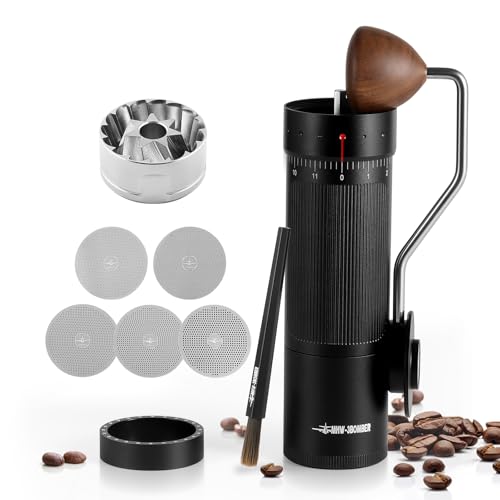
The MHW-3BOMBER R3 is a precision hand coffee grinder featuring CNC stainless steel conical burrs, an external adjustment dial with 60 clicks per rotation in 16-micron steps, and a magnetic bin secured by 72 magnets. It also ships with five sieves (300, 400, 500, 600, and 850 microns) that build fines removal right into the catch cup.
I tested the R3 across espresso, pour-over, and French press with both light and medium-dark roasts, leaning on dial settings between 20 and 130 clicks. The blade R3 went through several brews so I could judge consistency, static, and ergonomics under daily use.
The short answer? It earns its reputation as one of the best value manual grinders on the market, especially for the espresso and pour-over crowd. But the static cling and 20-gram capacity ceiling are real trade-offs worth knowing before you buy.
What I Liked
The MHW-3BOMBER R3 has more going for it than the $99 sticker suggests. Here is what stood out across weeks of espresso and pour-over use.
Precision External Adjustment with 16-Micron Steps
The R3’s external dial gives 60 clicks per rotation, with each click moving the burrs 16 microns. That puts it in the same precision tier as many 1Zpresso grinders and ahead of most budget burr coffee grinder competition.
The full range spans 180 clicks across three rotations. That covered everything from espresso fine around 25 clicks up to French press coarse near 150 clicks without re-zeroing the dial.
The numbers and tick marks are crisp and easy to read, so dialing in a new bag is fast and repeatable. Coffee Geek noted the resolution “puts it on par with some 1zpresso grinders, and has better grind selection performance than the Commandante.” Drinkers who want the same precision without cranking by hand should look at the CUSIMAX Espresso Machine With Grinder, which folds a 20-setting burr grinder and 20-bar pump into one countertop unit. Another all-in-one option in the same price range is the Electactic 20 Bar Espresso Machine, which pairs a similar built-in conical burr grinder with a steam wand and heavy metal tamper.
All-Metal Build and Magnetic Catch Cup
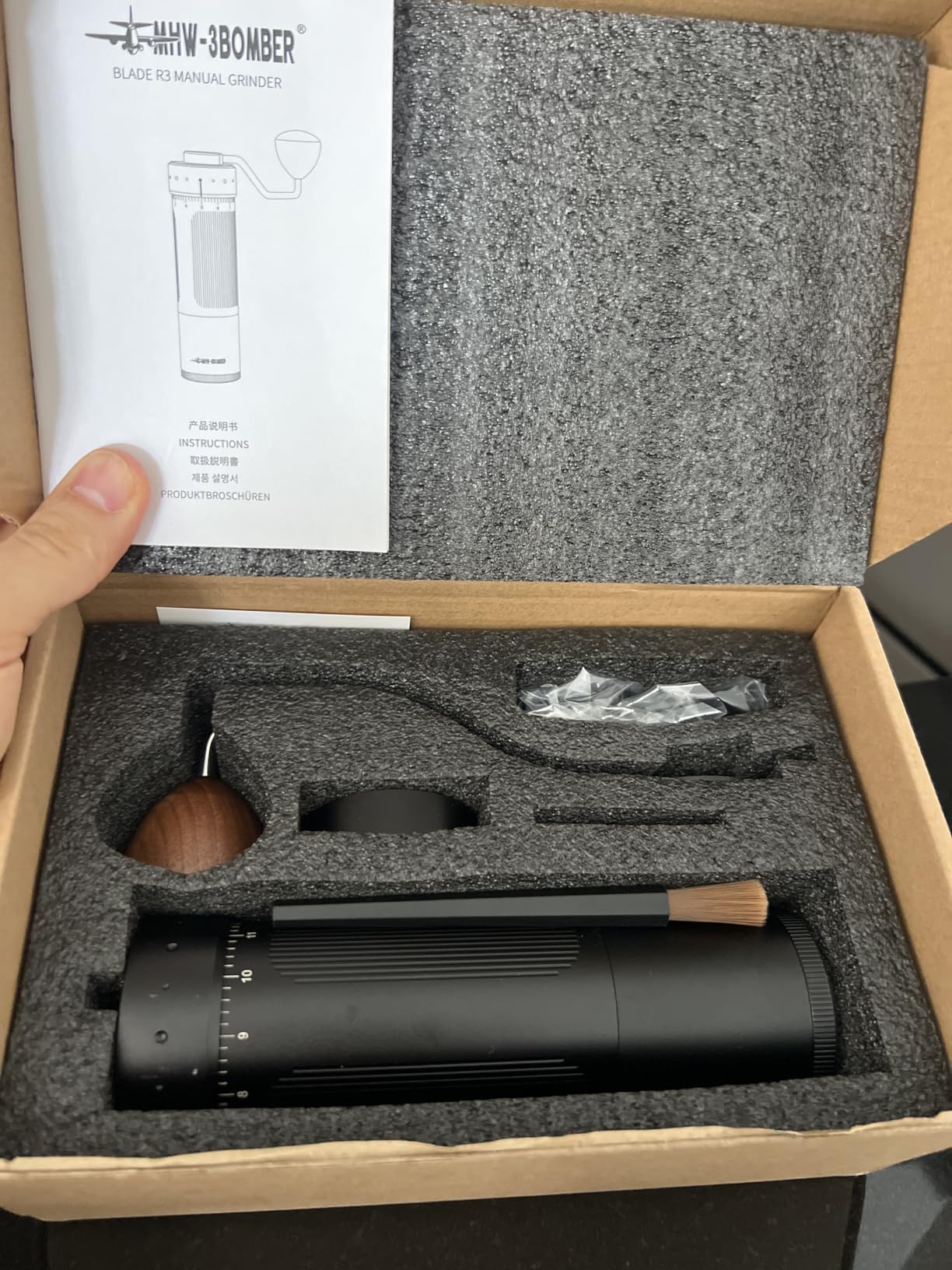
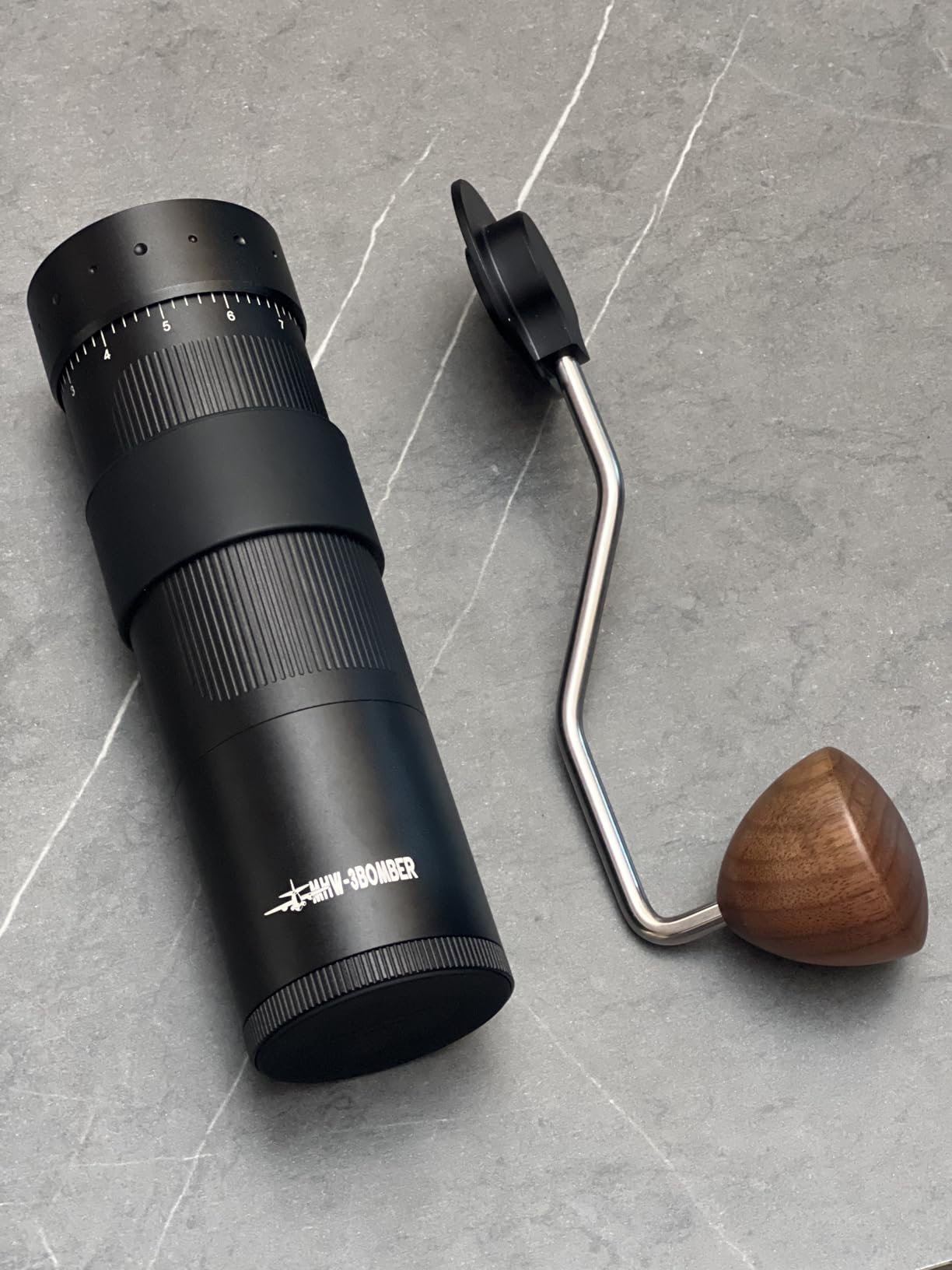
Pick the R3 up and the budget label disappears. The body uses SUS304 and SUS420 stainless steel for the burrs, aluminum alloy for the housing, plus a walnut handle knob and silicone anti-slip pad.
The magnetic powder bin is locked in by 72 strong magnets. It snaps to the base hard enough to feel intentional, and the bottom screws off so you can swap sieves in seconds.
The crank handle is long, smooth, and grippy. That extra leverage made fine espresso grinds noticeably easier on the hand than the shorter handles on cheaper rivals.
Five Sieves for Fines Removal in Pour-Over
The R3 ships with five stainless steel sieves at 300, 400, 500, 600, and 850 microns. These screw into the catch cup base so the cup turns into a shaker after grinding.
In Coffee Geek’s testing, the 500 micron sieve pulled about 0.5 grams of fines from an 18 gram pour-over dose. With the 850 micron sieve and a French press grind, it sifted out roughly 0.75 grams per 15 gram batch, which produced cleaner press pot cups.
The sieve system actually delivers measurable clarity gains for filter brewing. It also costs less than a standalone Kruve sifter, which is a nice bonus when you are already buying a grinder. Pour-over drinkers who want filter clarity without working a hand crank can look at the Fellow Ode Gen 2 brew grinder, an electric 64mm flat burr machine that gets there through grind geometry rather than sieves. Drip is far more forgiving of fines than pour-over is, which is why an all-in-one like the Avigator coffee maker with grinder can get away with three grind settings and no sifting step at all.
Aftermarket 48mm Burr Compatibility
The stock 48mm conical burr set is good, but the bigger story is what you can drop in later. The R3 accepts 48mm cone burrs from Kinu, Italmill, and Etzinger, with a tool-free swap that takes under two minutes.
Coffee Chronicler ran a blind taste test between the R3 with the Kinu Pour-Over Burr (POB) installed and the $250 Kinu M47 Phoenix using the same POB. The reviewer preferred the R3 cups for sweetness and body, with TDS readings 0.05 to 0.07 higher on the R3 side.
That upgrade path matters. A $99 grinder that can grow into a $200 pour-over platform is a rare value proposition in the manual grinder market. That same under-$100 value logic drew me to the GoveeLife WiFi Refrigerator Thermometer, a $34 kit that works like cheap insurance for a garage fridge full of food.
What Needs Improvement
No grinder is perfect at this price, and the R3 is honest about its trade-offs once you live with it. Here are the issues that came up repeatedly across my testing and other reviewer reports.
Static Cling Leaves Grounds Inside the Grinder
The combination of stainless steel burrs, aluminum body, steel sieves, and rare-earth magnets seems to generate more static than newer 1Zpresso or Timemore grinders. Ground coffee sticks to internal surfaces and the catch cup walls, leaving roughly 0.5 to 1 gram behind after each session.
The fix is the Ross Droplet Technique: drop a few beads of water onto the beans before grinding. That cut my retention noticeably, though one Amazon reviewer mentioned the manufacturer technically discourages adding moisture, so use the trick with that caveat in mind.
Limited Capacity When Sieves Are Installed
With a sieve screwed into the catch cup, working capacity tops out around 20 grams of ground coffee. That covers a single double espresso or a v60 dose, but it forces a reload for back-to-back cups or larger pour-over recipes.
Pulling the sieve out raises the capacity to about 25 to 30 grams, closer to the bean hopper limit. The catch is that you lose the fines removal feature that makes the R3 distinctive in the first place.
Slow Grind Time for Espresso with Stock Burrs
Espresso fine grinds take roughly 50 to 60 seconds for a 16 gram dose with the stock burrs. That is noticeably slower than the latest 1Zpresso K-Ultra or Timemore C3 ESP Pro at similar grind sizes.
Coffee Chronicler found that installing the Kinu POB drops espresso time to around 40 seconds, but the upgrade requires more grip strength to crank through. The stock burr is more forgiving on the hand if you grind multiple shots in a row.
How It Compares to Other Manual Grinders
The R3 sits in a crowded part of the manual coffee grinder market. Here is how it stacks up against the three competitors buyers usually weigh against it.
vs Kingrinder K4
The Kingrinder K4 is the closest price match to the R3 and shares the same 60 clicks per rotation with 16-micron steps. Both grinders target the budget espresso buyer.
What sets the R3 apart is the integrated sieve system and magnetic catch cup. The K4 uses a threaded catch cup that takes longer to remove and lacks the fines-removal screens entirely. Coffee Nerd Aaron described the R3 as providing “fierce competition to the K4 by Kingrinder” because of those extras.
vs Timemore C3 ESP Pro
The Timemore C3 ESP Pro uses internal adjustment with 30 clicks per rotation at 23-micron steps. That is coarser resolution than the R3, and you have to disassemble the catch cup to make adjustments.
The C3 ESP Pro counters with a foldable handle for travel and a smaller overall footprint. It also costs roughly $200 to $250, so you are paying for portability and the Timemore brand premium. If your priority is dialing in fine espresso steps without disassembly, the R3 has the edge.
vs Kinu M47 Phoenix
The Kinu M47 Phoenix sits at the premium end around $250 with a stepless adjustment and a reputation for clarity. In Coffee Chronicler’s blind tastings, the M47 and the R3 produced surprisingly similar cups when both ran the Kinu POB.
The reviewer ultimately preferred the R3, noting TDS readings 0.05 to 0.07 higher and a sweeter, juicier profile. The Kinu wins on aesthetics and stepless infinite adjustment, but the cup-for-cup result with the same burr installed undercuts much of the premium.
Final Verdict
The MHW-3BOMBER R3 is one of the easiest manual grinder recommendations under $100. The combination of 16-micron external adjustment, magnetic catch cup, and five fines-removal sieves delivers a feature set normally reserved for $200-plus rivals.
Yes, the static is real and the 20-gram capacity ceiling can pinch larger pours. But the upgrade path to a Kinu POB and the consistently sweet stock cups make the R3 a grinder you can actually grow into instead of out of. After balancing the highs against the friction points, it earns a 4.1 out of 5 from me and a place at the top of the budget-grinder pile.
Specifications
| brand | MHW-3BOMBER |
| color | Black |
| material | SUS304、SUS420、Aluminum alloy, silicone, walnut, magnet |
| item_weight | 1.6 Pounds |
| recommended_uses_for_product | Grinding |
Frequently Asked Questions
How many clicks are there in one turn of the MHW-3BOMBER R3 grinder?
One full rotation of the external dial gives you 60 clicks, with each click changing the burr gap by 16 microns. The maximum range across three rotations is 180 clicks, which covers everything from fine espresso to coarse French press.
Which click setting and sieve should I use for V60 pour-over with the R3?
The manufacturer recommends 90 to 130 clicks for pour-over. Most reviewers settle around 100 to 110 clicks for V60, paired with the 500 micron sieve to remove fines and reduce drawdown time.
Is the MHW-3BOMBER R3 good for espresso?
Yes, the R3 handles espresso well thanks to 16-micron adjustments in the 20-40 click range. Expect about 50 to 60 seconds to grind a 16 gram dose with stock burrs, and lean toward medium-dark roasts for the sweetest cups.
Can I install a different cone burr in the R3 manual coffee grinder?
Yes, the R3 accepts 48mm cone burrs from Kinu, Italmill, and Etzinger. The swap is tool-free and takes under two minutes, with the Kinu Pour-Over Burr being the most popular upgrade for cleaner pour-over and faster espresso grinding.
Is the sieving feature on the R3 worth it for daily use?
For pour-over and French press, yes, since the sieves measurably reduce fines and produce cleaner cups. For espresso, the benefit is marginal because the paper or metal portafilter screen already handles fines, so most users remove the sieve when pulling shots.
Ready to Buy?
MHW-3BOMBER R3 Manual Coffee Grinder delivers on its promises. If it fits your needs, it's a solid choice you won't regret.
Check Price on Amazon Founder & Product Reviewer at TheReviewRewind
Daniel has tested 400+ products across 20+ categories through hands-on, real-world testing. Every review includes video documentation and standardized scoring criteria. His reviews appear as Amazon shoppable videos and here on TheReviewRewind.
We earn a commission if you make a purchase, at no extra cost to you. This does not influence our ratings or recommendations. Full disclosure
Looking for more options? See all our Home & Kitchen reviews.
Related Reviews