Philips Countertop Reverse Osmosis Water Filter Review: Plug-and-Play RO, Tested


Philips Countertop Reverse Osmosis Water Filter Review: Plug-and-Play RO, Tested
Philips Countertop Reverse Osmosis Water Filter
Buy if you want genuine reverse osmosis water from the Philips countertop filter without any plumbing, ideal for apartments, dorms, and offices. Skip if you have a large household or need fast, high-volume water on demand.
Buy on AmazonWhat We Liked
- Truly Installation-Free Setup
- Noticeably Cleaner-Tasting, Remineralized Water
- A Compact, Countertop-Friendly Design
- Efficient 3:1 Filtration With Low Upkeep
- Verified Safety and Performance Certifications
- A Handy Glass Bottle and Quiet Operation
What Could Be Better
- Slow Water Dispensing Speed
- Limited Usable Capacity and Frequent Refills
- Ongoing Filter and Waste Costs
- Some Operational Noise
How we test: Every product is used in real conditions and evaluated using our standardized scoring criteria. Read our full review methodology.
If your tap water has a metallic aftertaste, or you just have no idea what’s actually coming out of your faucet, a full under-sink reverse osmosis system usually means a plumber, a lost weekend, and a real bill. The Philips Reverse Osmosis Water Filter, sold as a compact reverse osmosis water filter dispenser, aims to skip all of that.
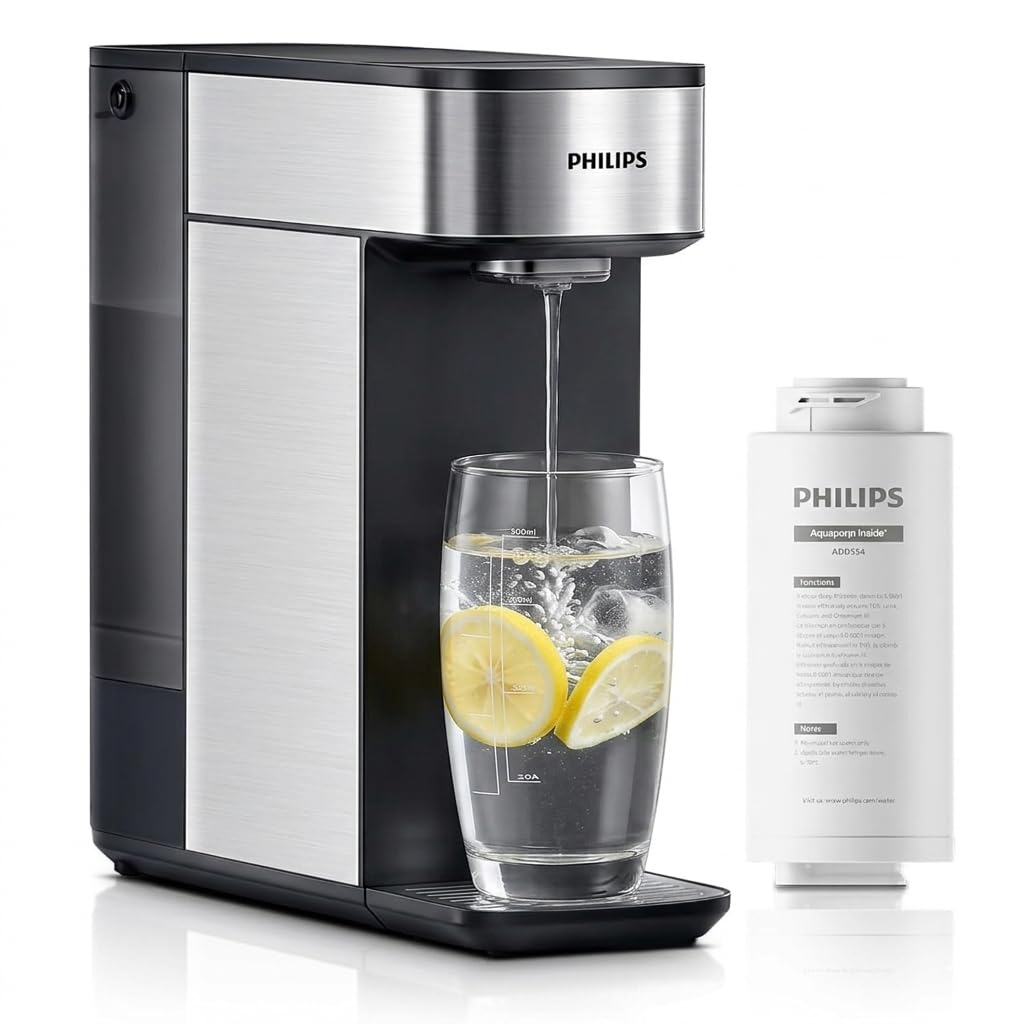
This Philips water dispenser (model ADD5930) turns ordinary tap water into purified water using a five-stage reverse osmosis process with Aquaporin Inside technology. As a countertop water filtration system, it plugs into a standard wall outlet, needs no plumbing, and fits on a normal counter.
I set it up straight from the box, primed the filter, and used it as my daily drinking-water source to judge taste, speed, and real water quality. I also cross-checked owner feedback on Reddit and independent lab testing of the wider Philips RO water platform.
The short version? As a countertop water purifier, this is one of the easiest ways to get genuine reverse osmosis water at home, with a few trade-offs around speed and capacity worth knowing before you buy.
What I Liked
The Philips impressed me in several areas over daily use. Here’s what stood out.
Truly Installation-Free Setup
The best part of this countertop reverse osmosis system is what you don’t do: no drilling, no plumbing, and no crawling under the sink. You fill the source tank with tap water, drop it into the slot on the back, plug the unit in, and press the button to prime the filter.
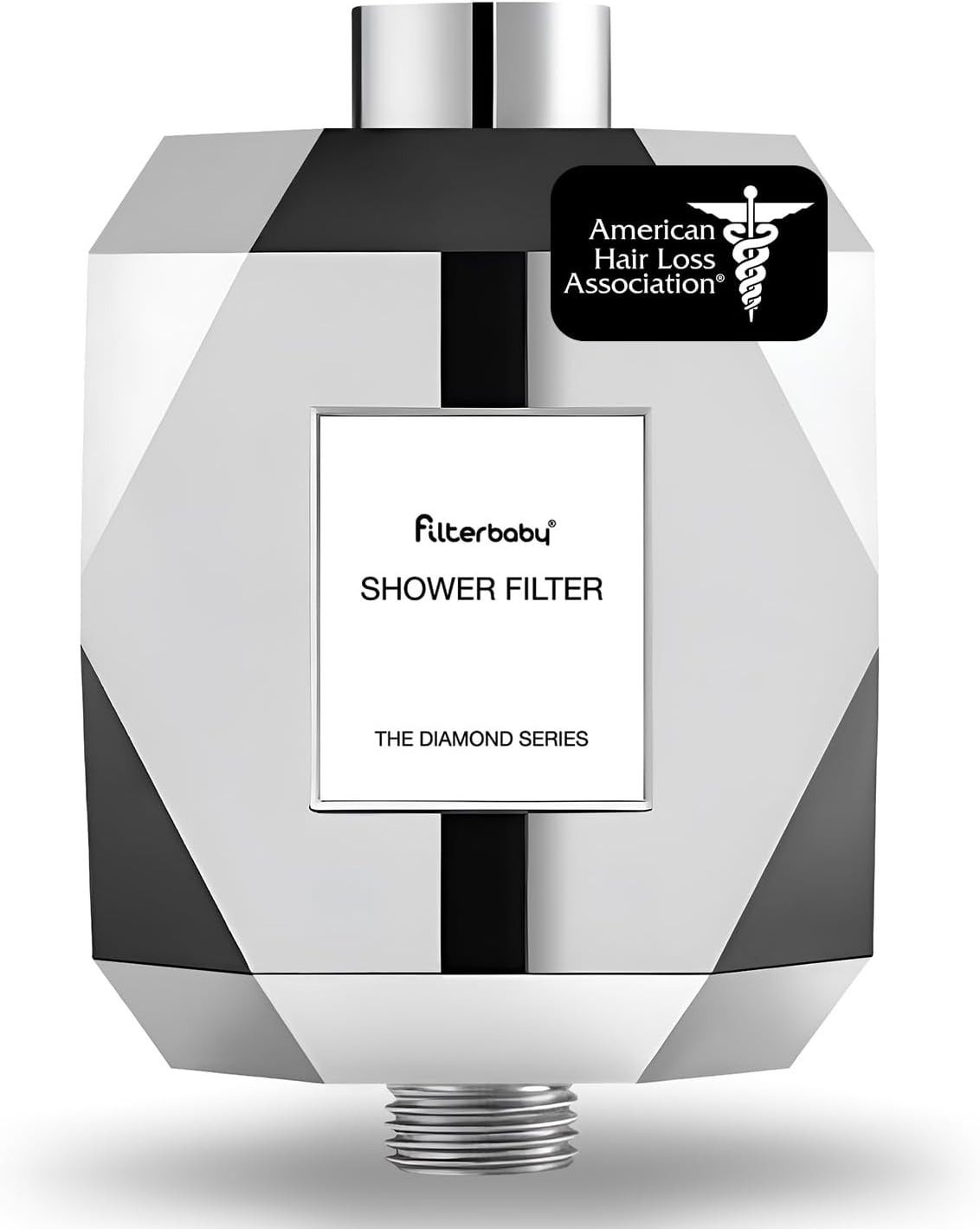
Priming runs two cycles over a few minutes, and a little harmless white residue comes through on the first pass, which is normal. After that, the reverse osmosis water filter is ready to pour. For anyone in an apartment, dorm, or office where you can’t touch the plumbing, this is the whole appeal. For the same convenience without any plumbing in the shower, the Filterbaby Titanium Shower Filter Pro threads onto your existing showerhead in about ten minutes.
Noticeably Cleaner-Tasting, Remineralized Water
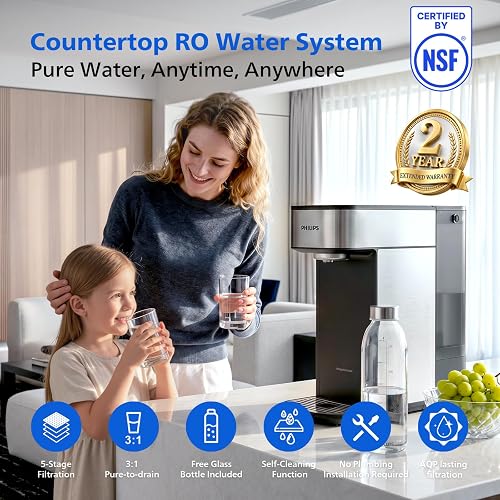
The five-stage RO process filters down to 0.0001 microns, stripping out chlorine, lead, and total dissolved solids — the kind of contamination a basic pitcher leaves behind. In my use, the metallic tap-water aftertaste was gone and the filtered water tasted crisp rather than flat.
This is Philips Aquaporin technology at work: aquaporins are proteins your own kidneys use for water purification, and Philips embeds them in the RO membrane so essentially one water molecule passes through at a time. A remineralization stage (remineralisation, in Philips’ own spelling) then adds calcium and magnesium back after the membrane removes everything, so you avoid the dead taste cheap RO water can have. Owners echo this: one user on r/WaterTreatment said the machine “completely eliminated that smell and taste.”
A Compact, Countertop-Friendly Design
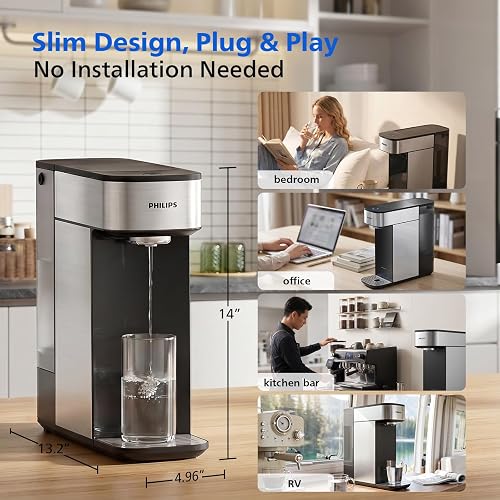
At roughly 5 x 13 x 14 inches, the footprint is narrow enough to slot into tight counter space, and it doesn’t have the bulky plastic-tank look most water filters carry. Build quality feels solid for an ABS unit, and it looks like something meant to sit on your counter.
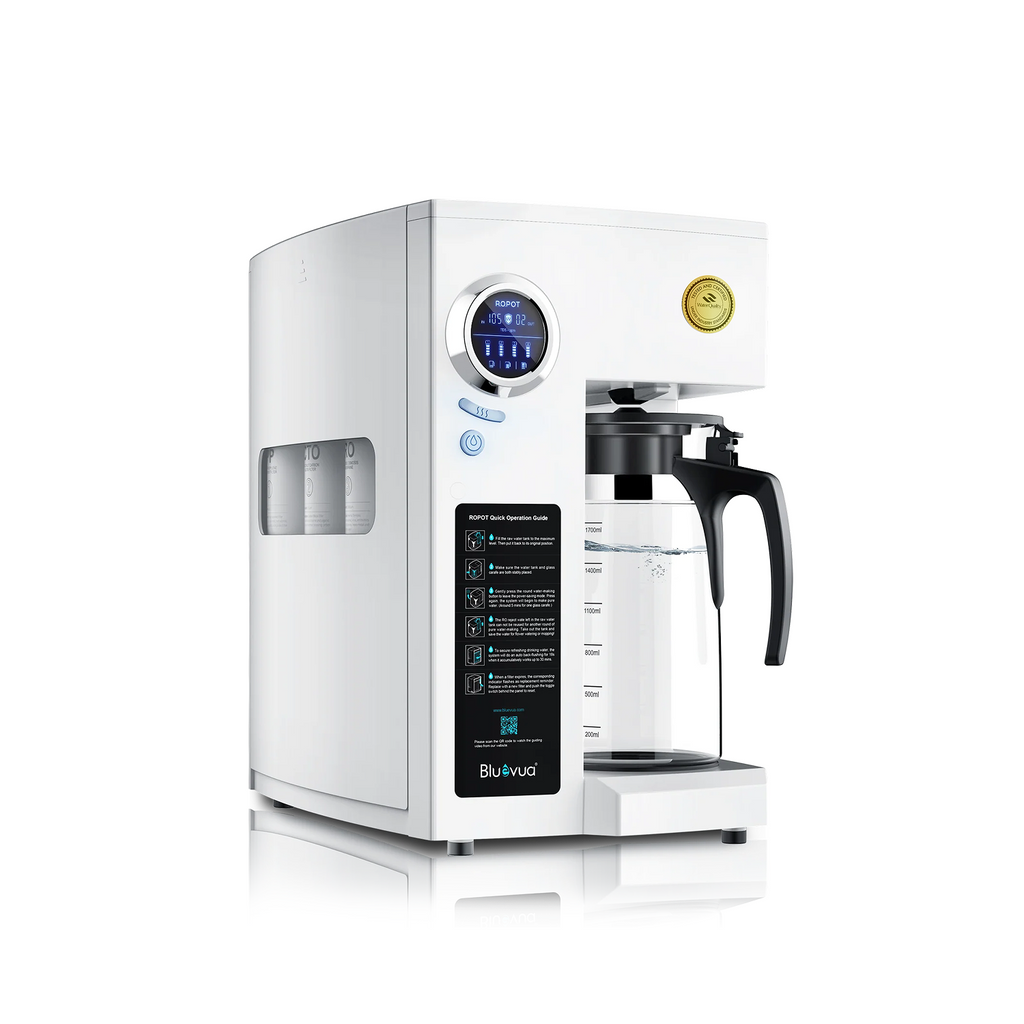
Because it isn’t bolted to your sink, you can pick the whole thing up and move it. The dispenser pops off with a handle so you can carry it to the sink, and the magnetic drip tray is a small but welcome touch. If you would rather store purified water in glass than plastic, the Bluevua ROPOT UV countertop system offers a similar move-anywhere design with a borosilicate carafe. And for anyone who works around water and wet gear all day, our Toolant waterproof gloves review covers a budget pick that keeps your hands dry on the job.
Efficient 3:1 Filtration With Low Upkeep
Most home RO units waste about four gallons for every gallon you drink. Philips runs that ratio in reverse at about 3:1, so roughly 75% of the water you pour in comes out as clean drinking water — thousands of gallons saved over a year.
Maintenance stays light for a water filtration system of this type. The main filter lasts up to 12 months, and a built-in self-cleaning function flushes the unit with tap water once a month to prevent mineral scale buildup.
Verified Safety and Performance Certifications
The unit is certified to NSF/ANSI 372 — the National Sanitation Foundation standard for low lead content in the materials touching your water — and to NSF/ANSI 58, the reverse osmosis performance standard. The filter core carries additional certification from SGS, an independent testing lab.
That third-party testing matters because it means the safety and filtration claims were checked by outside labs, not just Philips marketing. If independent certification guides your other home upgrades too, our Sunco BR30 LED bulbs review covers UL and Energy Star rated lighting on a budget. For that same lab-verified filtration in the shower, the Filterbaby Diamond Shower Filter is NSF 177 certified to cut chlorine and hard-water minerals off your skin.
A Handy Glass Bottle and Quiet Operation
The box includes a 16.9 oz (500 ml) glass bottle that’s genuinely useful for chilling water in the refrigerator, and you can just as easily fill a larger water jug straight from the dispenser. There’s also a small tool for swapping the filter. Day to day, the unit runs fairly quietly and improves water quality without demanding much attention.
What Needs Improvement
No countertop RO system is perfect, and the Philips has a few trade-offs worth weighing.
Slow Water Dispensing Speed
This dispenses about 9 oz (266 ml) of purified water per minute, roughly the time it takes to pull an espresso shot. For a system pushing water through five stages, that’s respectable, but it’s slower than your tap. Filling the 500 ml bottle takes a couple of minutes, and one Reddit owner noted that “filling up larger bottles over 500ml can take some time.”
Limited Usable Capacity and Frequent Refills
The clean water tank empties faster than you’d expect if several people drink from it through the day. You also refill the source water tank by hand, and some water is left behind each cycle, so this works best for one or two people rather than a busy household.
Ongoing Filter and Waste Costs
Like every RO system, it creates some water waste during filtration — you lose about a quarter of what you pour in, even though Aquaporin is more efficient than standard RO. The replacement filter cartridge (Philips ADD554) also isn’t cheap over the long haul, and a few buyers have reported it being hard to find in stock, so factor that into the total cost.
Some Operational Noise
There’s audible noise during filtration cycles. It runs fairly quietly overall, but you’ll hear the pump working while it’s making water, which is worth noting if the unit sits near a desk or bedroom.
How It Compares to Other Countertop RO Systems
The countertop reverse osmosis space has grown quickly, so here’s how the Philips stacks up against three popular alternatives.
vs AquaTru Carafe
The AquaTru Carafe is the certification champion, independently tested to NSF/ANSI 42, 53, 58, and 401 for its full list of contaminant claims, with a glass carafe on the clean-water side. It’s the pick if verified, broad contaminant removal is your top priority. The Philips answers with a much narrower footprint and a single-cartridge design that’s simpler to live with, where the AquaTru uses several filters and eats more counter space.
vs Waterdrop N1
The Waterdrop N1 is the closest match on concept: a slim, ambient RO water dispenser for the countertop. It’s faster at around 0.1 GPM, cheaper per gallon to run, and has a more informative display. The Philips counters with its Aquaporin membrane, a remineralization stage, and NSF/ANSI 58 certification, which the N1 lacks.
vs SimPure Y7P-BW
The SimPure Y7P-BW is the value-and-efficiency option, usually cheaper up front, with a 4:1 pure-to-drain ratio and built-in UV. It also has a small clean-water tank, noisier alerts, and a lengthy initial flush. The Philips feels more polished day to day and tastes better thanks to remineralization, though the SimPure wastes less water.
For most renters who just want reliable RO water on demand without plumbing, the Philips lands in a sensible middle: a cleaner design than the SimPure, more certification than the Waterdrop, and far less counter space than the AquaTru.
Final Verdict
The Philips Countertop Reverse Osmosis Water Filter delivers genuine five-stage RO water with true plug-and-play setup and water that actually tastes good, all without touching your plumbing.
I’m giving it a 4.5 out of 5.
It loses a little ground for slow dispensing, a modest amount of water waste, and filter costs that add up over time. But the installation-free design, remineralized taste, and third-party certifications more than earn it back for the right buyer. At its $259.98 price, it also undercuts pricier hot-and-cold RO stations while doing the core job well.
Bottom line: If you’ve wanted reverse osmosis water at home but installation has been the blocker, this Philips water dispenser is an easy recommendation for one- or two-person households.
Specifications
| Brand | PHILIPS |
| Capacity | 16.9 fluid ounces |
| container_type | Pitcher |
| filter_life_cycle | 12 months |
| Included Components | water pitcher, filter |
| Installation Type | Countertop |
| Product Dimensions | 12.83"L x 4.44"W x 13.86"H |
| manufacturer | PHILIPS |
| Material | Acrylonitrile Butadiene Styrene |
| maximum_flow_rate | 266 milliliters_per_minute |
| model_name | Philips Reverse Osmosis Water Filter Countertop ADD5930 |
| model_number | ADD5930BK/37_USSC |
| other_special_features_of_the_product | Reduce TDS, Self Cleaning |
| part_number | ADD5930BK/37_USSC |
| Power Source | Corded Electric |
| Purification Method | Activated Carbon |
| supported_water_tds_level_maximum_ppm | 500 |
| unit_count | 1 Count |
| upc | 840181304173 |
| warranty_description | Two Years |
| Special Feature | Reduce TDS, Self Cleaning |
| Package Information | Pitcher |
Frequently Asked Questions
Does the Philips Countertop Reverse Osmosis Water Filter need to be installed or plumbed in?
No. It's a countertop reverse osmosis system, so there's no drilling or plumbing. You fill the source tank with tap water, plug the unit into a wall outlet, prime the filter once, and it's ready to use.
How fast does the Philips countertop RO purify water?
It dispenses about 9 oz (266 ml) of purified water per minute, roughly the time it takes to pull an espresso shot. That's slower than a tap but fast for a countertop RO water system pushing water through five filtration stages.
Is the Philips countertop RO filter actually certified?
Yes. It's certified to NSF/ANSI 372 for low lead content and to NSF/ANSI 58, the reverse osmosis performance standard. The filter core is additionally certified by SGS, an independent testing lab.
Do countertop RO systems like this waste a lot of water?
Some waste is unavoidable with reverse osmosis. The Philips runs a 3:1 pure-to-drain ratio, so about 75% of the tap water you add becomes clean drinking water, far better than the roughly 1-to-4 ratio of many standard RO units.
How often do you replace the Philips filter, and what does it cost?
The integrated RO filter lasts up to 12 months under normal use. Replacements are the proprietary Philips ADD554 cartridge, so budget for it as an ongoing cost, especially in hard water areas where filter life can be shorter.
Does the Philips countertop filter dispense hot and cold water?
No. This model (ADD5930) offers a single water temperature only — ambient, room-temperature water — with no hot water dispensing or chilling. If you want hot and cold water on demand, Philips makes larger stations such as the ADD6900 series, but they cost more and take up more space.
Ready to Buy?
Philips Countertop Reverse Osmosis Water Filter delivers on its promises. If it fits your needs, it's a solid choice you won't regret.
Check Price on Amazon Founder & Product Reviewer at TheReviewRewind
Daniel has tested 400+ products across 20+ categories through hands-on, real-world testing. Every review includes video documentation and standardized scoring criteria. His reviews appear as Amazon shoppable videos and here on TheReviewRewind.
We earn a commission if you make a purchase, at no extra cost to you. This does not influence our ratings or recommendations. Full disclosure
Looking for more options? See all our Tools & Home Improvement reviews.
Related Reviews