Philips Countertop RO Water Filter Review: The Honest Take


Philips Countertop RO Water Filter Review: The Honest Take
Philips Countertop RO Water Filter
The Philips countertop RO nails the hard part: clean, remineralized reverse osmosis water, hot or cold, with zero plumbing. The catches are its size, the high upfront and filter cost, and no independent contaminant-reduction certification. Measure your counter before you buy.
Buy on AmazonWhat We Liked
- Reverse osmosis water that tastes clean, not flat
- Hot and cold water on demand from one countertop unit
- A real-time TDS display that shows the filter working
- The self-filling jug and hands-free ounce presets
- A large six-liter tank that cuts daily refills
- Installation-free setup that renters can actually use
What Could Be Better
- No independent contaminant-reduction certification
- It is large, heavy, and fussy about placement
- You never get the full six liters of usable water
- Hot water dispenses slowly and the unit can be loud
- A high upfront price and a proprietary yearly filter
How we test: Every product is used in real conditions and evaluated using our standardized scoring criteria. Read our full review methodology.
If your tap water tastes off and you have been hauling cases of bottled water home every week, you have probably looked at reverse osmosis. The usual catch is that real RO means a plumber cutting into the pipes under your sink, which you cannot do if you rent and may not want to do anyway. The Philips Countertop RO Water Filter is built to skip all of that.
It is a countertop reverse osmosis water purifier and dispenser that sits on the counter, fills from a tank you top up by hand, and plugs into a wall outlet with no installation. I went through the Amazon listing, the spec panels, independent lab testing, and three owner video walkthroughs to work out where this Philips water dispenser earns its high price and where it does not.
Philips Countertop RO Water Filter: The Quick Take
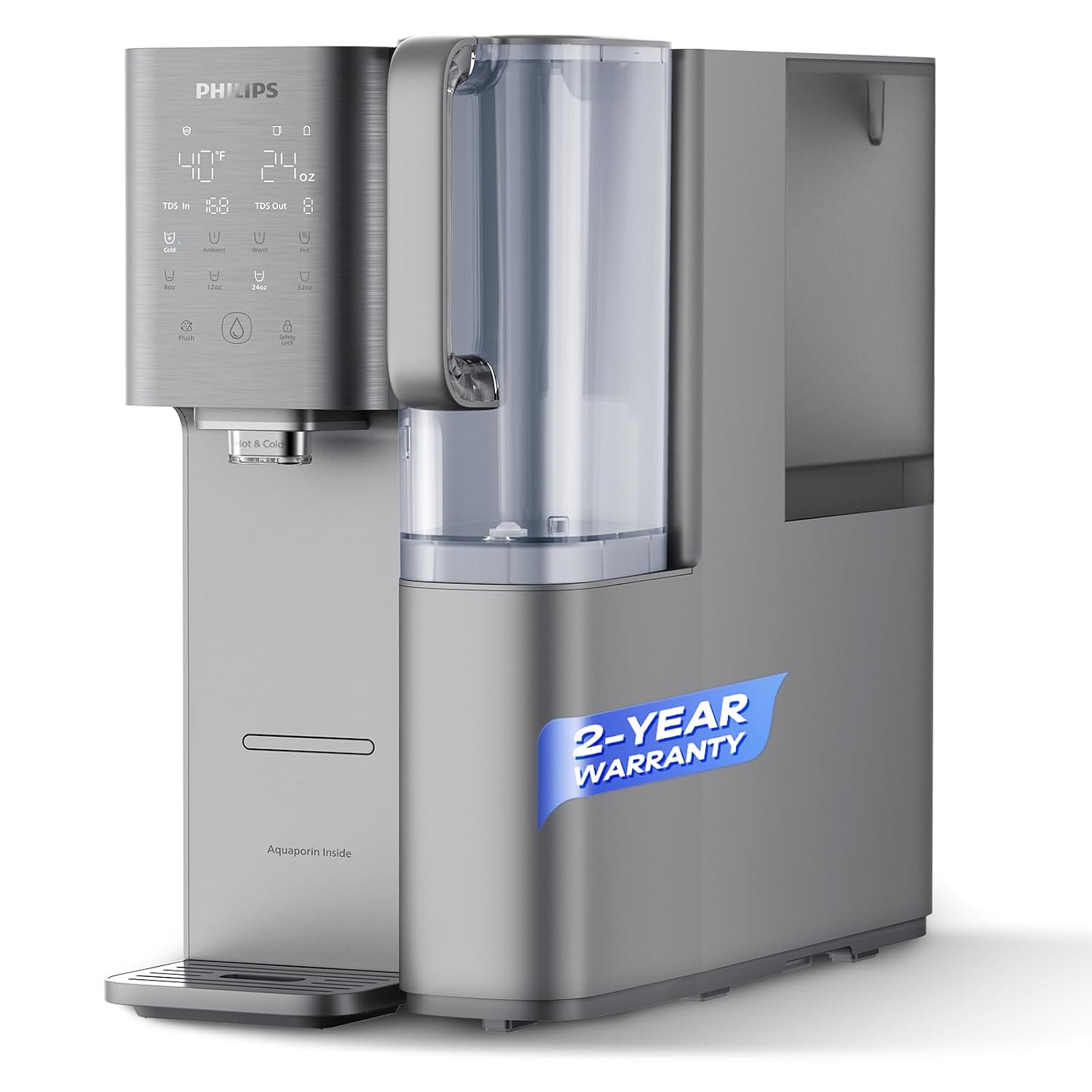
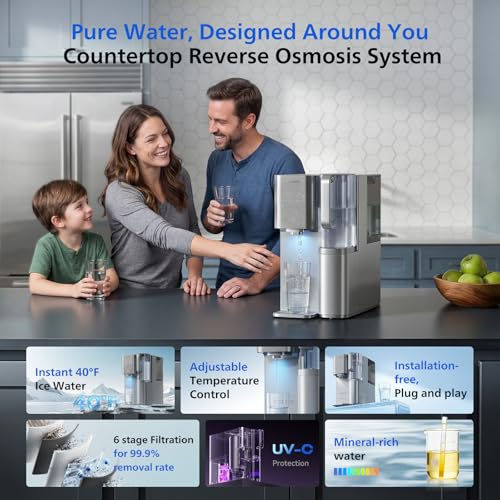
This is a six-stage reverse osmosis system that Philips builds around its Aquaporin Inside membrane, which filters tap water down to roughly 0.0001 microns to pull out chlorine, lead, and other dissolved solids. A final remineralization stage adds some minerals back, so the filtered water comes out clean and crisp instead of flat. A front panel shows a live TDS reading for the water going in and the water coming out, so you can watch the filtration working rather than just trusting it.
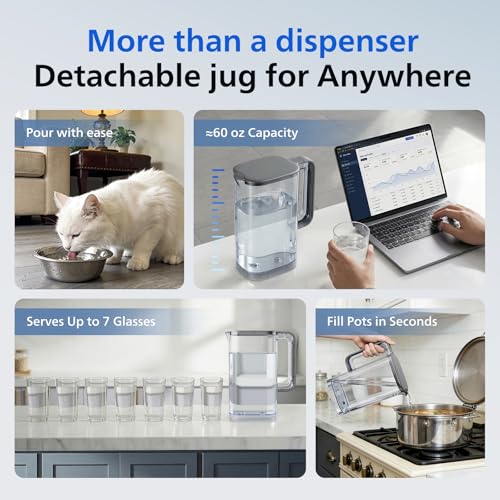
The machine dispenses hot and cold water on demand, holds about six liters of tap water in the rear tank, and self-fills a 1.8-liter jug of purified water at the front. It is sized for a household of two to five people and needs no plumbing at all. What follows is where this countertop RO filter shines, where it frustrates, and who should actually buy it.
What I Liked
When the Philips is doing its job, it is genuinely good, and owners are consistent about what works. The spec panels and an independent lab test back up most of what the video reviewers describe.
Reverse osmosis water that tastes clean, not flat
Straight RO strips out nearly everything, including the minerals that make water taste like water, which is why a lot of reverse osmosis comes out tasting flat. The Philips runs a remineralization stage at the end, and you can taste the difference: clean and crisp with no odor or distilled-water aftertaste. In independent lab testing, the remineralization kept the pH close to neutral instead of turning acidic.
Hot and cold water on demand from one countertop unit
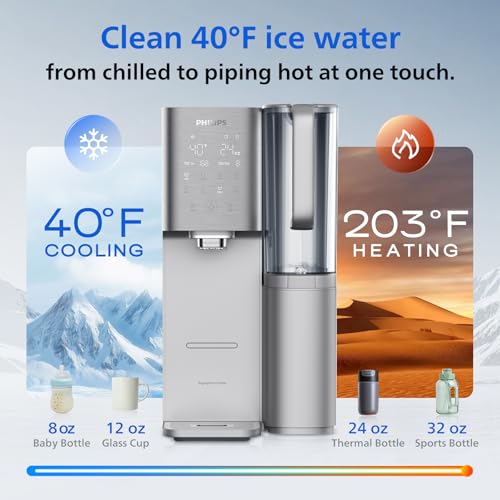
This is compressor-cooled, so it delivers genuinely cold water rated down to 40°F without ice, and it heats up to 203°F for tea or instant coffee. Four buttons cover cold, ambient, warm, and hot, and the warm and hot settings each toggle between two temperatures. One unit replaces a kettle and a fridge dispenser.
A real-time TDS display that shows the filter working
Right on the front panel, the Philips shows the total dissolved solids going in versus coming out, so you can see the filtration doing its job. On one owner’s tap water, that was around 300 TDS in and about 35 out, and a lab test measured roughly an 80% drop. It is a satisfying bit of transparency most filters do not offer.
The self-filling jug and hands-free ounce presets
The filtered water collects in a detachable 1.8-liter jug at the front, and the machine senses when it is seated and tops it off automatically. The dispenser also has four volume presets from 8 up to 32 ounces, so you tap 32 ounces, walk away, and it shuts off on its own. You can pull the drip tray and slot a pot or bowl under the spout for cooking.
A large six-liter tank that cuts daily refills
The rear tap-water tank holds about six liters, roughly a gallon and a half, which is large for a countertop water system. For most households that means refilling about once a day instead of constantly. One family of three went from topping up a smaller unit several times a day to filling this one once.
Installation-free setup that renters can actually use
There is no plumbing and no installation: you fill the tank, plug it in, run one flush cycle, and it is ready to dispense. That makes reverse osmosis realistic for renters and anyone who does not want to pay to plumb an RO system under the sink. Setup took independent testers under half an hour despite the manual quoting far longer.
What Needs Improvement
Most of the gripes here are not defects so much as the realities of living with a big, expensive countertop RO system. Knowing them before you buy is the difference between a happy kitchen and a return.
No independent contaminant-reduction certification
Philips markets this unit as certified to NSF/ANSI/CAN 372, and the filter core also carries an SGS certificate. That 372 standard only covers lead-free materials, meaning the parts touching your water are safe; it is not a certified contaminant-reduction number like NSF/ANSI 58 or 53. Independent reviewers at Water Filter Guru went further and could not find the 372 listing for this model in the IAPMO, WQA, or NSF databases at all, so treat the real-time TDS display, not a lab seal, as your proof it is working.
It is large, heavy, and fussy about placement
The unit weighs around 32 pounds and stands about 17 inches tall, so you want a second person to set it up and a permanent spot picked before you commit. Because it is compressor-cooled, it needs roughly 7 to 8 inches of clearance behind it for ventilation, which pushes your real counter depth close to two feet. It is tall enough that it usually will not fit under a standard run of upper cabinets.
You never get the full six liters of usable water
Reverse osmosis concentrates the rejected gunk into the water left in the tank, so you are meant to dump the last quarter before refilling rather than running it dry. A red light blinks when the tank is low or the water quality in it drops, which is your cue to empty and refill. The practical result is that usable capacity is noticeably less than the number on the box, and heavy cooking use burns through it faster.
Hot water dispenses slowly and the unit can be loud
The hot side pours weaker and slower than cold, so filling a large bottle with hot water takes a while. Being compressor-cooled, it hums when the cooling kicks in, and out of the box it beeps at every button press and low-tank alert. The good news is the beep prompt can be muted with a panel button combo, so the noise is not a permanent dealbreaker.
A high upfront price and a proprietary yearly filter
This is among the most expensive countertop RO units you can buy, and the single six-stage cartridge is rated for about 12 months. The manual says only the Philips filter fits, so you cannot shop around for a cheaper third-party replacement, and that recurring cost is real. Factor the yearly filter into your budget, not just the sticker on the machine.
How It Compares
Shoppers cross-shop this Philips water dispenser against the two big countertop RO names, AquaTru and Waterdrop, and on community threads like r/WaterTreatment the recurring deciding factor is certification, not looks. That framing is where the Philips both wins and loses.
Against the AquaTru Classic, the trade-off is stark. The AquaTru costs meaningfully less and carries full IAPMO and NSF performance certifications across standards 42, 53, 58, and 401 for the contaminants it claims to remove. What it does not do is heat or chill water, so if hot and cold on demand is the whole reason you are here, the AquaTru is not a match.
The closest rival is the Waterdrop A1, the other hot-and-cold countertop RO dispenser. In Water Filter Guru’s lab testing it scored a touch higher than the Philips overall and costs less, though like the Philips it holds only a lead-free-materials certification rather than broad contaminant-reduction listings. The Philips counters with a slightly better 3:1 pure-to-waste ratio and a single all-in-one cartridge that makes filter changes simple.
The honest read is this: for lab-verified, certified contaminant reduction on a budget, the AquaTru is the smarter buy, and the Waterdrop A1 edges the Philips on price for a similar hot-and-cold feature set. The Philips earns its place if you specifically want its remineralized taste, its large tank, and its TDS display, and you are willing to pay for them.
Final Verdict
The Philips Countertop RO Water Filter earns a 4.0 because it does the hard part well and is upfront, through its TDS display, about what it is actually removing. When it is running, the water tastes clean and smooth, you get hot and cold on demand, and the self-filling jug plus ounce presets make it easy to live with day to day. Independent lab testing confirms it strips out most health-related contaminants, even if it leans on reverse osmosis’s reputation rather than a certification seal.
The caveats are real but knowable. It is big, heavy, and particular about where it sits; the tank never gives you every drop it advertises; and the high upfront price comes with a proprietary yearly filter and no independent contaminant-reduction certification. None of those are deal-breakers so much as things to weigh with eyes open.
If you want true reverse osmosis water, hot and cold, with zero plumbing, and you have measured out the counter space for it, this Philips water dispenser is worth checking out. If your budget is tighter or a verified certification matters more than hot-and-cold convenience, a certified unit like the AquaTru will serve you better for less.
Specifications
| Brand | PHILIPS |
| Model Name | ADD6928DG/37 |
| Special Feature | Adjustable Temperature, Built In TDS Meter, Change Filter Indicator, Cold and Hot Water, Reduce TDS |
| Purification Method | Aquaporin Inside Technology, Reverse Osmosis |
| Product Dimensions | 9.1"L x 17.5"W x 16.9"H |
| Item Weight | 14.5 kg |
| Material | Acrylonitrile Butadiene Styrene |
| Capacity | 1.8 liters |
| Installation Type | Countertop |
| Power Source | Corded Electric |
| Lower Temperature Range | 40 °F |
| Upper Temperature Rating | 203 °F |
| Maximum Flow Rate | 200 milliliters per minute |
| Supported Water TDS Level Maximum (PPM) | 1000 |
| Filter Life Cycle | 12 months |
| Included Components | 1*countertop dispenser |
| Warranty Description | 2 Year Manufacturer Warranty |
| Item Type Name | Reverse Osmosis Water Filter |
| UPC | 840181303114 |
| Manufacturer | PHILIPS |
Frequently Asked Questions
Is the Philips Countertop RO Water Filter good?
For water quality, yes. Independent lab testing found the Philips Countertop RO Water Filter removed most health-related contaminants by 80 to 100 percent, and the remineralization stage keeps the taste clean rather than flat. The main knocks are its size, its high price, and the lack of an independent contaminant-reduction certification.
Do countertop RO water filters like the Philips actually work?
Yes. A countertop reverse osmosis system pushes tap water through a membrane that blocks dissolved solids down to around 0.0001 microns, then stores the filtered water for you. The Philips shows a live TDS In versus TDS Out reading so you can confirm the filtration is working on your own water.
Is the Philips Countertop RO Water Filter NSF certified?
Only for lead-free materials. Philips lists the unit as certified to NSF/ANSI/CAN 372, which covers the safety of the parts touching your water, not how much of any contaminant it removes. Reviewers were unable to locate even that listing in the public IAPMO, WQA, or NSF databases, so it has no certified contaminant-reduction claim.
Which is better, the Philips Countertop RO Water Filter or a Brita?
They are different classes of filter. A Brita pitcher mainly improves taste and odor, while the Philips Countertop RO Water Filter uses reverse osmosis to strip out dissolved solids like lead and fluoride that a pitcher cannot touch. The Philips costs far more and takes up counter space, but it filters on a completely different level.
How much maintenance does the Philips Countertop RO Water Filter need?
The single six-stage cartridge is rated for about 12 months, and a panel light tells you when to swap it. Beyond that you run a built-in self-cleaning flush, hand-wash the tank and jug since they are not dishwasher safe, and dump the leftover reject water before refilling. Only the Philips replacement filter fits, so budget for that recurring cost.
Does the Philips Countertop RO Water Filter need plumbing or installation?
No. The Philips Countertop RO Water Filter is a plug-and-play dispenser: you fill the rear tank by hand, plug it into an outlet, run one flush cycle, and it is ready. That makes it a realistic reverse osmosis option for renters who cannot install an under-sink system.
Ready to Buy?
Philips Countertop RO Water Filter delivers on its promises. If it fits your needs, it's a solid choice you won't regret.
Check Price on Amazon Founder & Product Reviewer at TheReviewRewind
Daniel has tested 400+ products across 20+ categories through hands-on, real-world testing. Every review includes video documentation and standardized scoring criteria. His reviews appear as Amazon shoppable videos and here on TheReviewRewind.
We earn a commission if you make a purchase, at no extra cost to you. This does not influence our ratings or recommendations. Full disclosure
Looking for more options? See all our Home & Kitchen reviews.
Related Reviews