ZMZPA Sacral Silicone Foam Dressing 7x7 Review: Does This Budget Bedsore Pad Hold Up?


ZMZPA Sacral Silicone Foam Dressing 7x7 Review: Does This Budget Bedsore Pad Hold Up?
ZMZPA Sacral Silicone Foam Dressing 7x7
Buy if you are a caregiver who needs an affordable, large sacral dressing to help cushion and protect the tailbone from pressure sores, and you want a gentle, skin-friendly silicone border. Skip if you are managing heavy loose-stool incontinence, need a clinically proven brand like Mepilex, or expect any dressing to replace repositioning and professional wound care.
Buy on AmazonWhat We Liked
- The Gentle Silicone Adhesive Spares Fragile Skin
- Waterproof Film That Genuinely Shrugs Off Liquids
- A Large, Cushioned Pad Built for the Sacrum
- High Absorbency Keeps the Skin Dry Longer
- Split Backing Makes One-Handed Application Easy
What Could Be Better
- No Clinical Track Record Behind the ZMZPA Name
- The Gentle Hold Can Lift on Moist, Curved Skin
- Loose Stool Still Defeats a Bordered Dressing
- The Pad May Be Too Small for a Large Wound
- It Is Not a Replacement for Turning and Offloading
How we test: Every product is used in real conditions and evaluated using our standardized scoring criteria. Read our full review methodology.
If you have ever dealt with a wound dressing that peels off the moment there is any sweat or moisture, or one that tears at fragile skin when it is time for a change, you know how much that matters for someone who is bed or chair bound. A pressure ulcer on the tailbone, the kind of bed sores that form over the sacrum, is painful, slow to heal, and easy to make worse with the wrong bandage.
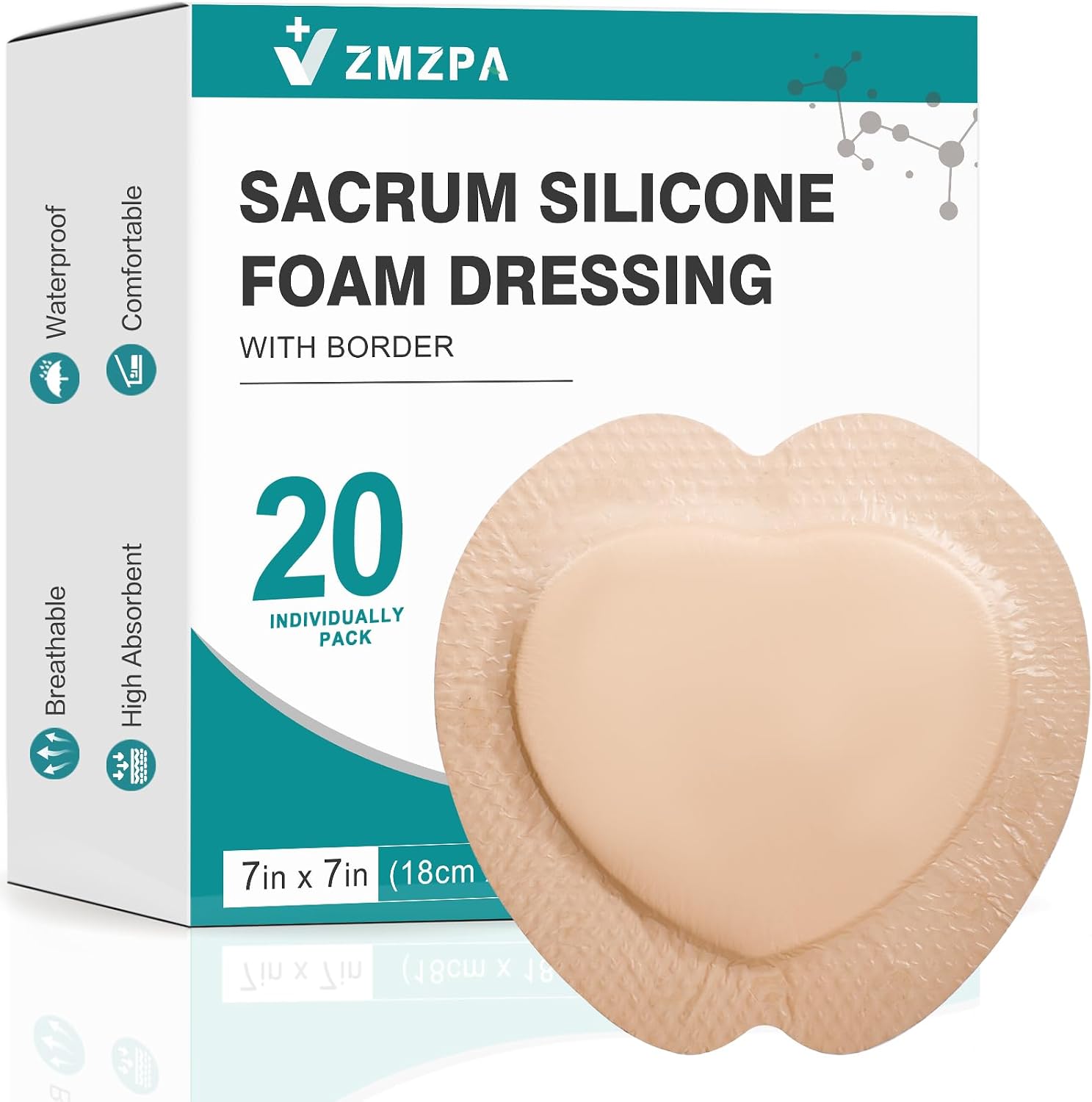
The ZMZPA Sacral Silicone Foam Dressing is a silicone foam dressing with border shaped for the sacrum and lower back. Each one is a 7 x 7 in pad with a soft, absorbent foam center, and they come 20 to a pack, individually sterile-sealed. At $48.99 for the box, that works out to roughly $2.45 per dressing, which is a fraction of what the big clinical brands charge.
I went through the build, ran the waterproof and adhesive tests, and checked the marketing claims against what wound care guidelines actually say. The short version: this is a solid budget silicone foam dressing for prevention and cushioning, with a few honest caveats you should know before you buy.
What I Liked
For a generic brand, this sacral dressing gets the fundamentals right. Here is what stood out across the build, the demo, and the claims that actually held up.
The Gentle Silicone Adhesive Spares Fragile Skin
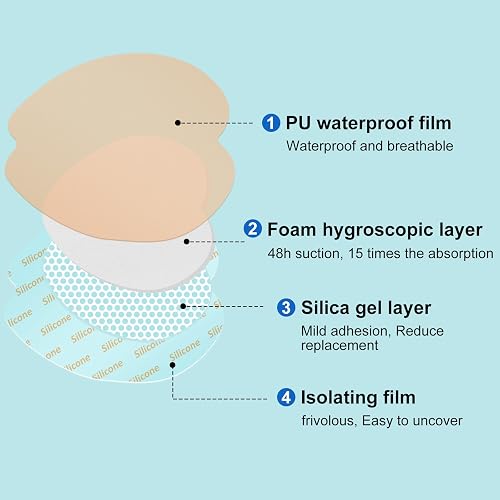
The layer that touches the skin is a soft silicone adhesive, medical grade and hypoallergenic, and this is the part that matters most for elderly or delicate skin. In the hands-on test I pressed a dressing onto my hairy forearm, then pulled it off. It gripped securely but lifted away without yanking hair, without pain, and without leaving residue.
That is the whole point of a silicone adhesive over the cheap acrylic glue on a drugstore bandage. It holds to dry skin around the wound but will not bond to the wound bed itself, so dressing changes do less damage to healing tissue and surrounding skin.
Waterproof Film That Genuinely Shrugs Off Liquids
The top of the dressing is a semi-permeable polyurethane film, and it feels as slick and waterproof as it looks. In the pour test, water ran straight off the surface and the pad underneath stayed dry rather than soaking through.
The film is the reason this works on higher-moisture areas like the sacrum and buttocks. It keeps liquids and contaminants out while staying breathable, so you are protected if the area gets wet without sealing everything in.
A Large, Cushioned Pad Built for the Sacrum
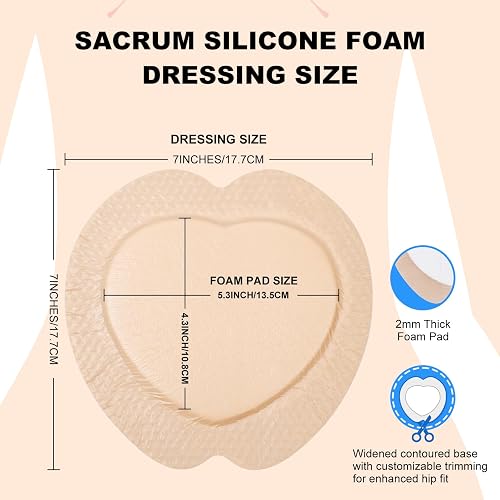
This is a large, specialized dressing, not a spot bandage. The overall footprint is 7 x 7 inches with a contoured, apple-shaped border and a soft foam center measuring 5.3 x 4.3 inches, so there is plenty of coverage for the tailbone area.
The foam and gel give you a layer of cushioning between a sore spot and the bed or chair. The same size suits surgical wounds and other sacral wounds in the area, and for someone spending most of the day lying down, that bit of padding and pressure relief is a real comfort, even if it is not a substitute for proper offloading. That same focus on soft, skin-friendly silicone shows up in smaller everyday products too, like the GMS Optical silicone nose pads that cushion eyeglass frames against the bridge of the nose. For a loved one who spends more of the day sitting than lying down, a cushion like the Primica donut pillow takes pressure off the tailbone in a chair the way this pad does in bed.
High Absorbency Keeps the Skin Dry Longer
Under the film sits a thick polyurethane foam core and a super-absorbent layer. ZMZPA claims it locks away up to 15 times its weight in fluid, and while that exact figure is a marketing number, the dressing is clearly built to pull exudate away from the skin and hold it.
In practice, a genuinely absorbent dressing means fewer changes than plain gauze and less chance of the surrounding skin getting waterlogged and soft. Fewer changes also means you disturb a tender area less often, which caregivers will appreciate.
Split Backing Makes One-Handed Application Easy
The adhesive side is covered by a split, two-piece backing, like a large butterfly bandage. You peel one side, position the center, then peel the second flap, which keeps your fingers off the sterile adhesive and makes placement on an awkward spot much easier.
The border is also thin and flexible enough to conform to the curve of the sacrum, and the manufacturer says it can be trimmed for a better hip fit. That is one spot where this budget option is actually more forgiving than a premium dressing like Mepilex, which is not meant to be cut.
What Needs Improvement
No dressing is perfect, and a budget one carries a few extra caveats. None of these are dealbreakers, but you should walk in with clear eyes.
No Clinical Track Record Behind the ZMZPA Name
Here is the honest headline: ZMZPA is a generic Amazon brand with no published clinical studies. The strong evidence you read about for silicone foam dressings was generated with name brands, not this one.
When a meta-analysis in the International Wound Journal from Tongde Hospital of Zhejiang Province found that sacral foam dressings cut sacral pressure ulcer rates (RR 0.37), the products tested were Mepilex Border and Allevyn Life. This dressing shares the same four-layer construction category, but that is not the same as having its own trial data. Treat the clinical results as the promise of the format, not a guarantee from this specific SKU.
The Gentle Hold Can Lift on Moist, Curved Skin
The manufacturer actually labels the adhesive “mild” silicone, and that gentleness is a double-edged sword. On dry skin it is kind and secure, but the sacrum is a moist, curved, high-friction spot, and that is exactly where budget borders tend to curl.
This is a genre-wide issue, not unique to ZMZPA. One buyer of a similar budget silicone dressing found the adhesive was “not strong enough to maintain a secure hold in the moist areas.” A skin-prep barrier film around the edges helps, and a low per-dressing price saves nothing if the edges lift and you change it early.
Loose Stool Still Defeats a Bordered Dressing
If the person you are caring for has frequent loose stool or fecal incontinence, think twice. Stool gets trapped under the border, breaks the seal, and leads to leakage and skin maceration no matter how good the dressing is.
This is not a cheap-brand problem either. In one ICU study, 17.5% of patients had to stop using even premium sacral dressings because they could not withstand loose stool. For heavy incontinence, talk to a nurse about whether a bordered dressing is the right call at all.
The Pad May Be Too Small for a Large Wound
The border is a generous 7 x 7 inches, but the actual absorbent foam pad in the middle is 5.3 x 4.3 inches. For prevention or a small-to-moderate sore that is fine, but a large or heavily draining wound can outrun that pad.
Wound-care guidance calls for a dressing that covers the wound with a margin of healthy skin around it. If the sore is bigger than a playing card, this may not be the right size, and bordered dressings are generally not designed to be pieced together.
It Is Not a Replacement for Turning and Offloading
The biggest mistake with any sacral dressing is treating it as a cushion that lets you skip repositioning. It is padding and protection, not a pressure-relief system.
Every major guideline, including the 2025 international pressure injury guideline, stresses that a prophylactic dressing only works alongside repositioning, daily skin checks, and a proper support surface. Nurses on forums describe skin that was “red and macerated and indented in the exact shape of the border” after a dressing was left on too long without a look underneath. Lift it, inspect the skin at least daily, and keep turning the patient.
How It Compares
The sacral dressing aisle runs from drugstore-cheap to clinical-grade, and price per dressing varies wildly. Here is where ZMZPA sits against the names caregivers ask about most.
vs Mepilex Border Sacrum
Mepilex Border Sacrum from Molnlycke is the gold standard, and it is the dressing behind most of the high-quality trial data. A systematic review and meta-analysis found prophylactic sacral dressings, Mepilex chief among them, cut pressure injury incidence by roughly 70%.
That evidence comes at a price: Mepilex runs around $15 per dressing and is marked not cuttable. ZMZPA costs about $2.45 each. You are paying six times more for Mepilex’s proven anti-shear design and its deep evidence base, which can be worth it in a hospital but is a steep ask for home prevention.
vs Allevyn Life and Optifoam Gentle EX
Allevyn Life Sacrum and Medline’s Optifoam Gentle EX are the other two clinical mainstays. Allevyn Life is a five-layer dressing with a change indicator at about $11 each, while Optifoam Gentle EX lands near $9.61 with up to seven days of wear when appropriate.
Smith+Nephew also makes a thinner bordered silicone variant, the ALLEVYN Gentle Border, that turns up in the research. Both Allevyn lines are backed by studies indexed on PMC and both outclass ZMZPA on documentation and quality control. But one caregiver still called Allevyn Life expensive and noted the adhesive irritated her relative’s skin, a reminder that a premium price does not buy a perfect dressing. For caregivers also managing the bladder side of incontinence care, the Nature’s Craft Advanced Kidney Support supplement is a gentle daily option for urinary tract support alongside the skin protection a dressing provides.
vs MedVance Silicone Bordered 7x7
The closest real rival is MedVance, another budget silicone bordered foam dressing sold on Amazon in the same 7 x 7 size. It is the fairest apples-to-apples comparison, since neither brand carries the clinical pedigree of the big three.
MedVance reviews split much like you would expect from this tier: some praise the gentle removal, others complain it “tugs at the wound” or that it ran “too big” and had to be cut. ZMZPA competes on the same value proposition, and its 20-count pack and trimmable border give it a slight edge on price per dressing and fit.
Final Verdict
The ZMZPA Sacral Silicone Foam Dressing does the important things well. The silicone adhesive is genuinely gentle, the waterproof film holds up, and the large cushioned pad is well shaped for the sacrum, all at a price that undercuts the clinical brands many times over.
At 4.3 out of 5, it earns a solid recommendation with caveats. It loses ground mainly because ZMZPA has no clinical trials of its own, the gentle hold can lift on moist skin, and no dressing survives heavy loose stool or replaces repositioning.
Think of it as the sensible budget choice for prevention and everyday cushioning, not a clinical substitute for a nurse’s wound plan. If you are managing a serious, heavily draining, or deteriorating sore, get professional guidance from a health care provider and consider a proven brand.
Bottom line: For a caregiver who needs an affordable, skin-friendly sacral dressing that stays put and does not make changes miserable, this is an easy one to keep stocked, as long as you pair it with turning, skin checks, and common sense.
Specifications
| brand | ZMZPA |
| manufacturer | ZMZPA |
| dressing_size | 7 x 7 in (18 x 18 cm) |
| foam_pad_size | 5.3 x 4.3 in (13.5 x 10.8 cm) |
| count_per_pack | 20 dressings, individually sterile-sealed |
| construction | 4-layer bordered foam (silicone contact, absorbent foam core, PU waterproof film) |
| wound_contact_layer | Soft medical-grade silicone adhesive |
| package_dimensions | 9 x 8.25 x 3.25 inches; 1.2 pounds |
Frequently Asked Questions
What is the best sacral bedsore dressing?
Clinically, Mepilex Border Sacrum has the strongest evidence, with meta-analyses showing prophylactic sacral foam dressings cut pressure injuries by around 70%. For budget home care, a bordered silicone foam dressing like this ZMZPA 7x7 covers the same bases at a fraction of the cost, as long as you pair it with repositioning and skin checks.
Are silicone foam dressings good for pressure ulcers?
Yes, as part of a plan. Guidelines give a conditional recommendation to use a multilayer soft-silicone foam dressing on the sacrum for people at high risk, used alongside repositioning and a support surface. The silicone contact layer is gentle on fragile skin, but the evidence is rated low certainty and the dressing is an adjunct, not a cure.
How do you use a sacrum silicone foam dressing?
Clean the wound and surrounding skin, then pat it completely dry so the silicone border can grip. Peel one side of the split backing, center the pad over the sacrum and coccyx, then remove the second flap and smooth the edges down. Always follow the guidance from your clinician or wound-care nurse.
How often should you change a sacral foam dressing?
Change it when drainage reaches the edges of the pad, or if it loosens, leaks, or gets soiled. For light exudate a dressing can stay on for several days, but you should still lift it to inspect the skin at least once a day. Never leave it on just to hit a maximum wear time.
How many dressings come in a pack and what size are they?
This ZMZPA pack contains 20 individually sterile-sealed dressings. Each one measures 7 x 7 inches overall with a contoured border, and the absorbent foam pad in the center is 5.3 x 4.3 inches.
Is ZMZPA as good as Mepilex or Allevyn?
It uses the same four-layer silicone foam format, but ZMZPA is a generic brand with no clinical trials of its own, while Mepilex and Allevyn have years of published data. For low-cost prevention and cushioning at home it is a reasonable value pick. For a serious or deteriorating wound, a proven brand and professional guidance are worth the extra cost.
Ready to Buy?
ZMZPA Sacral Silicone Foam Dressing 7x7 delivers on its promises. If it fits your needs, it's a solid choice you won't regret.
Check Price on Amazon Founder & Product Reviewer at TheReviewRewind
Daniel has tested 400+ products across 20+ categories through hands-on, real-world testing. Every review includes video documentation and standardized scoring criteria. His reviews appear as Amazon shoppable videos and here on TheReviewRewind.
We earn a commission if you make a purchase, at no extra cost to you. This does not influence our ratings or recommendations. Full disclosure
Looking for more options? See all our Health & Household reviews.
Related Reviews