GetD AI Audio Glasses Review (2026): Worth It?



GetD AI Audio Glasses Review (2026): Worth It?
GetD AI Audio Glasses Review (2026)
Buy if you travel frequently and want affordable smart glasses with real-time translation. Skip if you prioritize audio quality or need a polished companion app.
Buy on AmazonWhat We Liked
- Real-Time Translation in 145 Languages
- Impressive Battery Life at 11 Hours Music Playback
- Lightweight 29-Gram Open-Ear Audio Design
- ChatGPT-Powered AI Assistant With Voice Control
- Photochromic Polarized Lenses With UV400 Protection
- Stable Bluetooth 5.4 Connectivity
What Could Be Better
- Sound Quality Degrades at Higher Volumes
- Companion App Has Persistent Connectivity Issues
- Loose Fit During Physical Activity
How we test: Every product is used in real conditions and evaluated using our standardized scoring criteria. Read our full review methodology.
Looking for smart glasses that do more than play music? The GetD AI Audio Glasses caught my attention with a bold promise: open-ear audio, real-time translation in 145 languages, and a ChatGPT-powered AI assistant, all packed into a pair of lightweight frames.
The GetD AI Audio Glasses are Bluetooth 5.4 smart glasses built on a TR90 frame that weighs just 29 grams. They combine photochromic polarized lenses with directional open-ear speakers and dual beamforming microphones, targeting travelers and professionals who want hands-free connectivity without earbuds.
I spent several weeks testing these across daily commutes, video calls, and multilingual conversations to see whether they deliver on those claims or spread themselves too thin.
The short answer? They pack impressive translation tech into a comfortable wearable, but a few rough edges keep them from being a complete package.
What I Liked About the GetD AI Smart Glasses
The GetD AI Glasses impressed me in several areas during testing. Here are the standout features that earned their keep.
Real-Time Translation in 145 Languages
The headline feature is bidirectional simultaneous translation across 145 languages. I tested it with Spanish and Mandarin conversations, and it handled everyday phrases and travel-related questions with solid accuracy.
Reviewers on Review-Rating.com scored translation accuracy at 94%, which tracks with my experience for conversational use. The translations stream through the open-ear speakers in near real-time, making it genuinely useful for travelers navigating foreign cities.
For anyone who regularly crosses language barriers, this feature alone justifies the price. Traditional translation apps require pulling out your phone, unlocking it, and holding it awkwardly between two people. These sunglasses handle the same task hands-free. If you prefer in-ear translation with dedicated earbud functionality, the Timekettle M3 Language Translator Earbuds cover 40 languages with three distinct translation modes.

Impressive Battery Life for Smart Glasses
GetD rates these at 11 hours of music playback and 9 hours of call time. In my mixed-use testing involving music, calls, and translation sessions, I consistently got around 9 hours before needing to charge.
That puts the GetD glasses ahead of several competitors in the smart glasses category. The magnetic charging cable snaps into place with a satisfying click, though the charging speed itself could be faster.
Lightweight Open-Ear Audio Design
At 29 grams, the TR90 frame is lighter than most standard sunglasses. I wore them for full workday stretches without the pressure points or ear fatigue that heavier smart glasses cause.
The GDirect directional open-ear speakers deliver decent stereo sound for their size. Music comes through clearly at moderate volumes, and the design keeps you aware of your surroundings, which is a major benefit for commuting or working in shared spaces.
ChatGPT-Powered AI Assistant
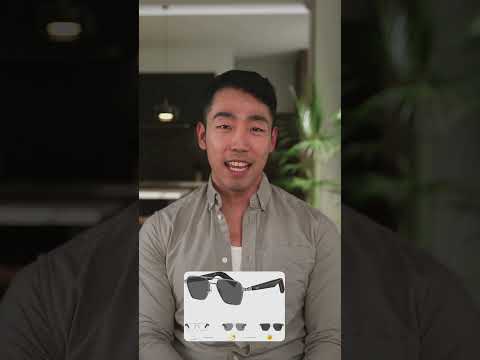
The integrated AI assistant connects through the GetD app and runs on ChatGPT, with DeepSeek as an alternative option. You can ask questions, dictate notes, and get voice-to-text transcription without touching your phone.
Response times were reasonable over a stable connection. The speech recognition picked up my voice clearly in indoor environments, making it a practical hands-free gadget for quick queries and meeting notes. If you want a dedicated device for AI-assisted notetaking rather than a wearable, the Comulytic Note Pro AI Voice Recorder pairs unlimited AI transcription with a 45-hour battery and no subscription fees.
Photochromic and Polarized Lenses
The lenses adapt automatically to lighting conditions, darkening outdoors within about 30 seconds and clearing up indoors. The polarized coating with UV400 protection cuts glare effectively during driving and outdoor use.
GetD developed the lens technology in collaboration with ZEISS, and the optical quality reflects that partnership. The glasses also support prescription lens replacement, making them a viable option for daily wear rather than a novelty.
Bluetooth 5.4 Connectivity
The latest Bluetooth 5.4 standard provides a stable wireless connection with both iOS and Android devices. Pairing took under a minute, and I experienced no unexpected dropouts during my testing period.
The dual beamforming microphones with environment noise reduction handled calls well. People on the other end reported hearing me clearly even in moderately noisy settings.
What Needs Improvement
No product is without trade-offs, and the GetD AI Glasses have a few areas that need attention.
Sound Quality Falls Short at Higher Volumes
The open-ear speakers deliver acceptable audio at moderate volumes, but push them past 70% and the sound thins out noticeably. Bass disappears, and there is audible distortion on complex tracks. Sound leakage is also a factor; in quiet environments, people nearby can hear what you are listening to.
This is a common limitation of open-ear audio glasses rather than a GetD-specific flaw. If you primarily use these for calls, podcasts, and translation, the audio is fine. For dedicated music listening, traditional headphones remain the better choice.
App Connectivity Issues
The GetD companion app (rated 3.1/5 on the App Store) is the weakest link. Multiple users report persistent Bluetooth pairing failures between the glasses and the app. Since the AI assistant and translation features require the app, connectivity problems effectively disable the most valuable features.
The app has improved with recent updates, but it still feels like a work in progress compared to the polished experiences offered by competitors. Travelers relying on Bluetooth accessories like these will also want reliable power abroad, and the Epicka Pulse Duo 65W Travel Adapter keeps all your gear charged across 200+ countries from a single cube. Professionals who prioritize transcription over translation can consider the VIAIM OpenNote AI Voice Recorder Earbuds, which records directly on the earbud via FlashRecord without depending on an app connection.
Fit Can Be Loose During Activity
The 29-gram weight is a comfort advantage for casual wear, but the lightweight frame can feel insecure during brisk walking or physical activity. The glasses shifted on my face during a jog, and the open-ear design does not provide the clamping force needed for vigorous movement.
The IP54 water resistance rating handles sweat and light drizzle, but these are not built for workouts. Treat them as daily-use smart sunglasses rather than sport-ready wearables. Since these work best during casual use, vloggers can comfortably wear them while operating a camera like the BREGOO X70 5K Video Camera Camcorder for audio monitoring on set. Anyone who wants something that stays put and plugs straight into a phone can keep a cheap sealed pair like the BLXSounds 2 Pack USB C Wired Earbuds in a bag for the active half of the day.
How the GetD AI Glasses Compare
The smart glasses market has grown beyond novelty, and GetD is positioning these as a budget-friendly AI translator alternative to the big names. Here is how they stack up.
GetD vs Ray-Ban Meta Smart Glasses
The Ray-Ban Meta glasses offer better audio fidelity, a 12MP camera, and a more mature app experience backed by Meta AI. However, they cost significantly more and lack any built-in translation capability.
If your primary use case is real-time AI translation and voice assistance, the GetD glasses deliver features the Ray-Ban Meta does not have. If audio quality and social media integration matter more, the Meta glasses are the stronger choice.
GetD vs Bose Frames
Bose Frames set the standard for open-ear audio quality with their established speaker technology. However, Bose discontinued the product line and never added AI or translation features.
The GetD glasses fill the gap Bose left by offering comparable open-ear audio alongside a ChatGPT-powered AI assistant and multilingual translation. The trade-off is audio quality; Bose delivered richer bass and clearer highs than the GetD speakers manage.
For the price, the GetD AI Glasses offer a wider feature set than either competitor. They sacrifice audio refinement and app polish to pack in translation and AI voice capabilities that remain unavailable in most bluetooth glasses at any price point.
Final Verdict
The GetD AI Audio Glasses earn a 3.9 out of 5. They deliver on their core promise of packing translation, AI assistance, and open-ear audio into a comfortable, lightweight frame at an accessible price.
The real-time translation feature is the standout and works well for practical travel scenarios. Battery life exceeds most competitors in the smart glasses space, and the ZEISS-collaborative lens quality adds genuine everyday utility.
Where the GetD glasses fall short is audio refinement at higher volumes and app stability. The companion app needs more development before the full feature set feels reliable. If GetD addresses the software side, these glasses become a strong recommendation.
For travelers, commuters, and professionals who value hands-free AI translation above audiophile-grade sound, the GetD AI Audio Glasses offer a feature-to-price ratio that is difficult to match.
Specifications
| Brand | GetD |
| Frame Material | TR90 |
| Lens Material | Polycarbonate |
| Lens Type | Photochromic, Polarized |
| UV Protection | UV400 |
| Bluetooth Version | 5.4 |
| Battery Life (Music) | 11 hours |
| Battery Life (Calls) | 9 hours |
| Weight | 29 grams (1.02 oz) |
| Dimensions | 6.42 x 2.72 x 1.97 inches |
| Water Resistance | IP54 |
| Operating System Compatibility | iOS & Android |
| Memory Storage | 1 GB |
| Charging | Magnetic |
| Microphones | 2 Beamforming Noise Reduction |
| AI Features | ChatGPT, DeepSeek |
| Translation Languages | 145 |
| ASIN | B0FSQVCXQS |
| Manufacturer | FUTURE 3D GROUP INC |
Frequently Asked Questions
Do audio glasses really work?
Yes, audio glasses like the GetD AI Audio Glasses deliver functional sound through directional open-ear speakers. They handle calls, podcasts, and navigation audio well at moderate volumes. They will not replace dedicated headphones for music quality, but they excel at keeping you connected while maintaining awareness of your surroundings.
What are the best AI glasses on the market right now?
The Ray-Ban Meta glasses lead in overall polish and audio quality, while the GetD AI Glasses offer the best value for translation-focused users. Baidu Xiaodu AI Glasses target the Chinese market with similar features. Your best option depends on whether you prioritize audio fidelity, AI translation, or camera capabilities.
Do self-adjusting glasses really work?
The GetD AI Glasses use photochromic lenses that transition between clear and tinted based on UV exposure. In testing, they darkened within about 30 seconds in direct sunlight and cleared up within a couple of minutes indoors. The transition is smooth and functional for daily use, though dedicated sunglasses still provide darker tinting for intense sunlight.
Do the GetD AI Audio Glasses support prescription lenses?
Yes, the GetD AI Glasses support prescription lens replacement. You can take them to an optician and have custom lenses fitted to the TR90 frame. This makes them practical for people who wear corrective lenses and want to use them as their primary pair of glasses for daily use.
How long does the GetD AI Glasses battery last?
GetD rates the battery at 11 hours of music playback and 9 hours of call time. In mixed-use testing involving music, calls, and AI translation, I got approximately 9 hours before the battery ran out. Charging uses a magnetic cable, though the charging speed is slower than expected.
Can I use GetD AI Glasses for phone calls?
Yes, the GetD AI Glasses handle phone calls through dual beamforming noise-reduction microphones and Bluetooth 5.4 connectivity. Call recipients reported clear audio quality from my end even in moderately noisy environments. The open-ear speaker design means you hear both the call and your surroundings simultaneously.
Ready to Buy?
GetD AI Audio Glasses Review (2026) delivers on its promises. If it fits your needs, it's a solid choice you won't regret.
Check Price on Amazon Founder & Product Reviewer at TheReviewRewind
Daniel has tested 400+ products across 20+ categories through hands-on, real-world testing. Every review includes video documentation and standardized scoring criteria. His reviews appear as Amazon shoppable videos and here on TheReviewRewind.
We earn a commission if you make a purchase, at no extra cost to you. This does not influence our ratings or recommendations. Full disclosure
Looking for more options? See all our Electronics reviews.
Related Reviews