I Tested the PSIER Bone Conduction Headphones: Budget Swim-Ready Open-Ear Buds


I Tested the PSIER Bone Conduction Headphones: Budget Swim-Ready Open-Ear Buds
I Tested the PSIER Bone Conduction Headphones
Buy the PSIER Bone Conduction Headphones if you want an affordable, IPX8-waterproof open-ear pair for lap swimming and running, with 32GB of onboard MP3 storage. Skip them if you expect deep bass or plan to stream Bluetooth underwater, which no bone conduction headphone can do.
Buy on AmazonWhat We Liked
- Legit IPX8 Waterproofing That Survives Full Submersion
- Open-Ear Comfort With No Ear Fatigue or Pressure
- 32GB of Onboard Storage for Phone-Free Swimming
- A Secure Fit That Does Not Budge in the Pool
- 8-Hour Battery, Multipoint Bluetooth, and a Clear Mic
What Could Be Better
- You Cannot Stream Spotify or Any Bluetooth Underwater
- Thin Bass and Outward Sound Leakage Come Standard
- A Proprietary Magnetic Cable Instead of USB-C Charging
- Salt Water and the Charging Contacts Do Not Mix
How we test: Every product is used in real conditions and evaluated using our standardized scoring criteria. Read our full review methodology.
Most waterproof headphones quietly die the first time you actually dunk them, because “waterproof” usually means rain and sweat rather than a real swim. The PSIER Bone Conduction Headphones set out to be the exception, and to do it at a budget price. They pair a certified IPX8 rating with 32GB of onboard storage so you can swim laps with music and no phone in sight.
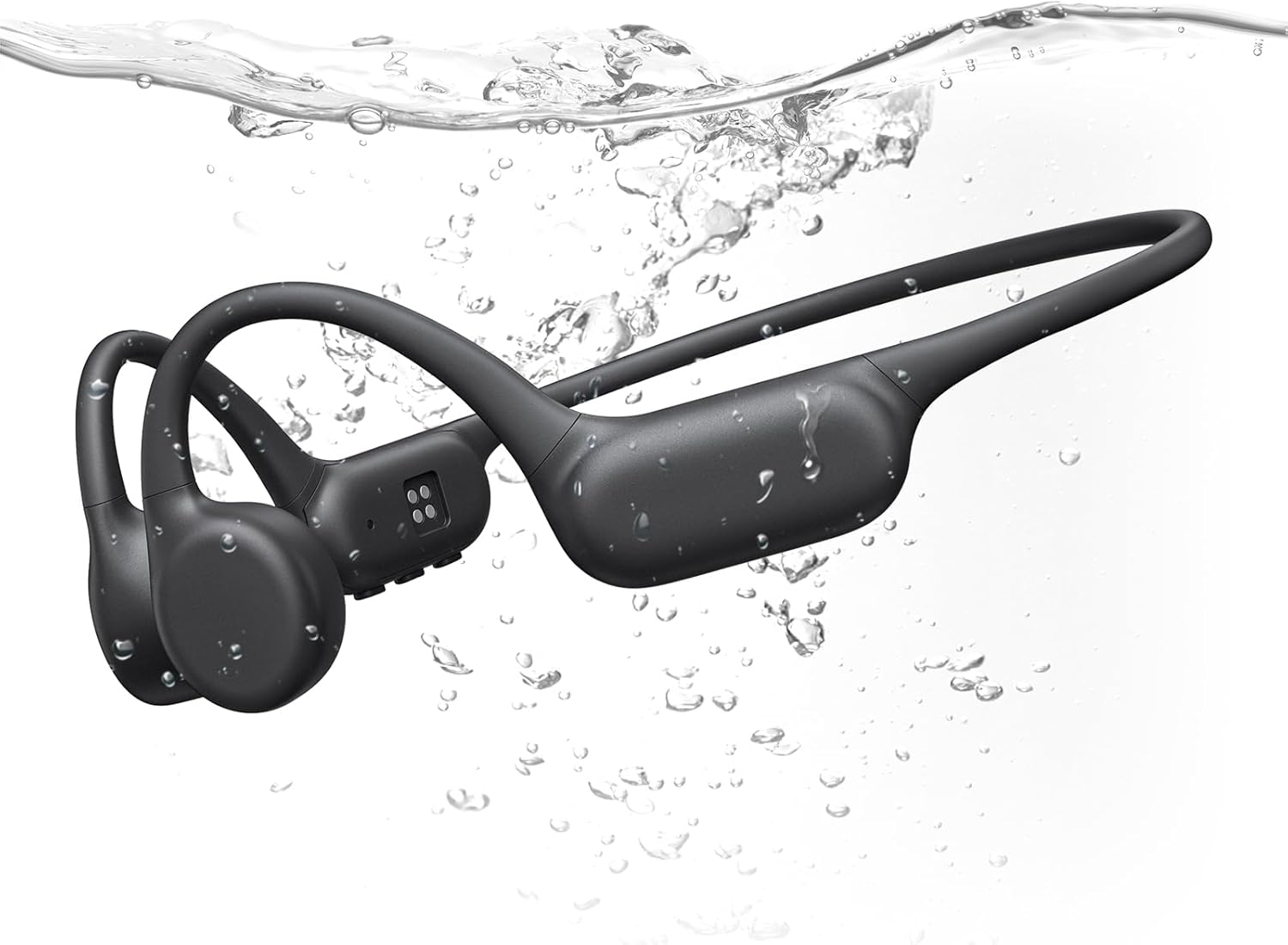
At their core these are open-ear bone conduction headphones. A flexible band wraps behind your head, soft pads rest on your cheekbones in front of your ears, and nothing goes inside your ear canal at all. Sound travels through the bone straight to your inner ear, which keeps your ears completely open to your surroundings.
I loaded them up, took them through pool sessions and dry-land runs, and paid attention to the two things that decide whether a swim headphone is worth it: whether the waterproofing is real and whether the audio is usable. At $49.99 they undercut the big swim brands by a wide margin. Here is where the PSIER earns that price, and the one quirk that catches almost everybody off guard.
What I Liked About the PSIER Bone Conduction Headphones
Several things stood out once these became my pool companion, and most of them come down to genuinely useful swim features rather than raw audio quality.
Legit IPX8 Waterproofing That Survives Full Submersion
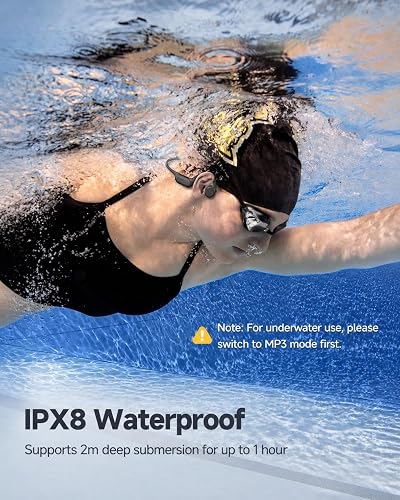
These carry a certified IPX8 rating, which means submersion up to two meters deep for a full hour, not just splash or sweat protection. I ran them through a lot of pool time, including diving to the bottom of the deep end, and no water got in.
The whole shell uses a fully sealed coating instead of a seam you would worry about. For a pair at this price, the waterproofing is the standout, and it is the reason to buy a set like this in the first place.
Open-Ear Comfort With No Ear Fatigue or Pressure
Because the pads sit on your cheekbone and nothing enters your ear canal, your ears stay open and there is no pressure after an hour. I never dealt with the sweaty, fatigued feeling that sealed earbuds leave behind.
If earbuds fall out of your ears or leave you with irritation, this open-ear design sidesteps that entirely. The same design keeps you aware of your surroundings, so you can hear traffic on a run or hold a conversation without taking anything off.
32GB of Onboard Storage for Phone-Free Swimming
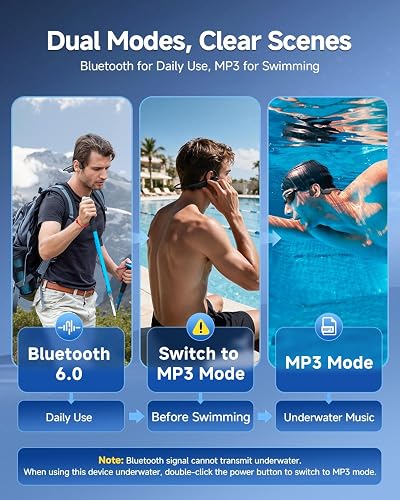
The headphones pack 32GB of internal storage, which holds around 4,000 songs depending on file quality. You plug them into a computer, they mount as a drive named S18, and you drag your files across before double-clicking into MP3 mode.
That means no phone, no signal, and nothing to carry while you swim. It also opens the door to audiobooks, podcasts, and sermons, since anything you can save as a file will play back underwater.
A Secure Fit That Does Not Budge in the Pool
The wraparound band is flexible and easy to put on, and once it is on it simply does not move. Across full swim sessions the fit stayed locked in place, which is exactly what you want when you are pushing off a wall.
PSIER also includes an adjustable strap for smaller heads, so a loose fit is easy to fix. The trade-off is that you cannot really cinch the pads deep against your face, but that never caused a problem in testing.
8-Hour Battery, Multipoint Bluetooth, and a Clear Mic
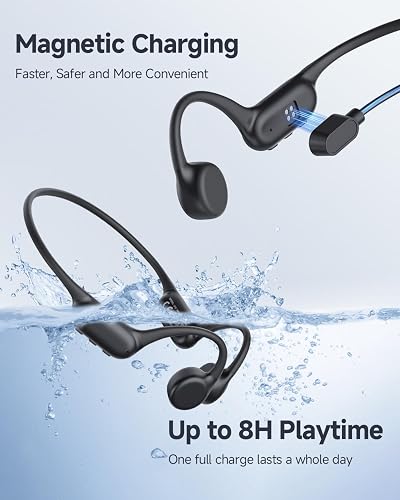
Battery life is rated at up to 8 hours of continuous play on Bluetooth, and a full charge takes about 2 hours off the magnetic cable. In practice that is a couple of weeks of swim sessions between top-ups.
On the wireless side you get Bluetooth 6.0 with low latency and multipoint, so you can pair two devices at once and switch between a phone and a laptop without repairing. The built-in mic handles calls and Zoom fine, and because your ears are open you hear your own voice normally instead of that muffled, plugged-up feeling.
What Needs Improvement
The swim features are strong, but a few caveats keep the PSIER from being a no-questions-asked pick. Most are honest trade-offs of the category rather than defects.
You Cannot Stream Spotify or Any Bluetooth Underwater
This is the one that catches almost everybody off guard, and it is the number one reason people return these. Bluetooth does not work underwater on any headphone, because water physically blocks the signal, so you have to load files onto the device and use MP3 mode in the pool.
The catch is that Spotify downloads are locked inside its app and will not transfer. Apple Music, Amazon Music, and anything you own outright will copy over fine, but if you are a Spotify-only listener you need to know this before you buy.
Thin Bass and Outward Sound Leakage Come Standard
Bone conduction skips the deep vibrations that sealed earbuds produce, so the bass is thin and the mids and highs are less crisp than a good pair of earbuds. It sounds surprisingly clear underwater, since water carries the vibration well, but on dry land it will not be mistaken for audiophile sound quality.
There is also no noise canceling here, which is the point of an open-ear design rather than a flaw. The flip side is sound leakage: in a quiet office or library, the person next to you can hear your music if the volume is high. If you want that same open-ear awareness on land without the swim focus, the Raycon Fitness Open Ear Earbuds aim their ear hook fit at runners and cyclists. The Raycon Essential Open Ear Earbuds are another awareness-first option for commuters who want one pair for music, podcasts, and calls.
A Proprietary Magnetic Cable Instead of USB-C Charging
The charging cable is a proprietary magnetic connector rather than USB-C, so if you lose it you cannot just grab another cord from a drawer. That is common on waterproof bone conduction headphones, but a standard USB-C port would still be more convenient.
You also need to dry the metal contacts before charging. Plugging in with pool water still sitting on the pins can short the connection, so towel them off and give it a minute first. If you prefer gear that leans on magnets for power instead, the Rokform Magnetic Wireless Charger with Stand shows how a strong magnetic connection can keep charging clean and cable free.
Salt Water and the Charging Contacts Do Not Mix
The IPX8 rating handles pool water without complaint, but sea water is a different story. Salt works its way into the charging contacts and causes problems over time.
If you are an ocean swimmer, you have to be religious about rinsing the headphones with fresh water after every session. It is manageable, but it is extra maintenance that pool swimmers can ignore.
How the PSIER Bone Conduction Headphones Compare
The swim headphone aisle runs from cheap generics to premium open-ear sets that cost several times as much. Here is what you trade away, and what you gain, against the obvious alternatives.
vs Shokz OpenSwim Pro
The Shokz OpenSwim Pro is the premium benchmark at around $229.95, and it matches the PSIER on the essentials: 32GB of storage plus Bluetooth for dry-land listening. Shokz uses its 8th-generation bone conduction technology to reduce vibration and leakage, and reviewers at outlets like WIRED rank it the best overall swimming headphone.
What you are paying for is polish and reputation, not a longer feature list. The PSIER gives you the same core combination of onboard storage and open-ear waterproofing for roughly a fifth of the price, which is the entire pitch.
vs Shokz OpenSwim
The standard Shokz OpenSwim sells for about $149.95 and is IP68 rated, but it is MP3-only with just 4GB of storage and no Bluetooth at all. That makes it a dedicated pool tool rather than an everyday headset.
Against it, the PSIER actually looks generous: you get eight times the storage and full Bluetooth for calls, podcasts, and music out of the water. For a swimmer who also wants a wireless headset for the gym, the PSIER covers more ground for less money.
vs FINIS Duo and Big-Brand Budget Picks
The FINIS Duo is another popular lap-swimming pick, but like the basic Shokz it is an MP3-only device with no Bluetooth or app-based EQ. The established open-ear brands, including the running-focused Shokz OpenRun line, do have the edge on audio balance and support.
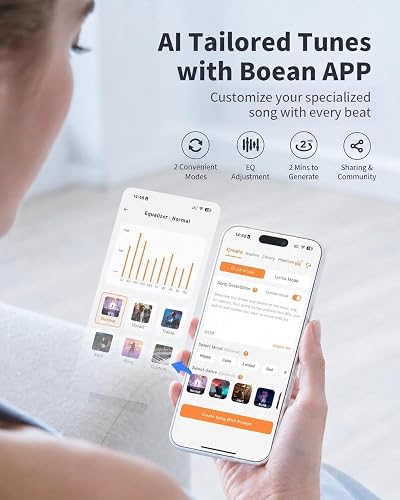
The honest catch is that many of those name-brand sets are only sweat and rain rated rather than fully submersible, and the ones that truly handle swimming cost far more. The PSIER hands you most of that practical feature set, plus a companion app with a custom EQ, at the budget end of the category.
Final Verdict
The PSIER Bone Conduction Headphones are one of the easier budget recommendations I have tested, as long as you understand what bone conduction is and is not. You get legitimately good IPX8 waterproofing, 32GB of onboard storage, a fit that stays put, and open-ear comfort that many earbud owners will appreciate.
I am giving them a 4.1 out of 5.
They earn that score for waterproofing that survives real submersion, a generous storage pool for phone-free swimming, an 8-hour battery, and multipoint Bluetooth 6.0 with a usable mic. They lose a little for thin bass, outward sound leakage, a proprietary magnetic charging cable instead of USB-C, and the salt-water maintenance ocean swimmers have to keep up with.
Bottom line: If you swim laps and want music without paying big-brand prices, the PSIER Bone Conduction Headphones are well worth a look, provided you can load files from something other than Spotify. If you demand deep bass for critical listening, or you will only ever stream Spotify, this is not the pair for you.
Specifications
| additional_features | Bone Conduction Technology, IPX8 Waterproof Rating, Open-Ear Design, MP3 Mode with Internal Storage |
| age_range_description | Adult |
| audio_driver_type | Bone Conduction Driver |
| battery_average_life | 8 hours |
| battery_charge_time | 1.5 hours |
| bluetooth_version | 5.6 |
| brand_name | PSIER |
| built_in_media | User Manual |
| color | Matte Black |
| compatible_devices | Cellphones |
| connectivity_technology | Wireless |
| control_method | Touch |
| control_type | Touch Control |
| earpiece_shape | Open Ear |
| enclosure_material | Plastic |
| frequency_range | 20Hz - 20,000Hz |
| headphone_folding_features | Open Ear |
| headphone_jack | No Jack |
| headphones_ear_placement | Open Ear |
| manufacturer | PSIER |
| model_name | S18 |
| model_number | S18 |
| noise_control | None |
| number_of_items | 1 |
| specific_uses_for_product | Fitness |
| style_name | Sport |
| unit_count | 1 Count |
| warranty_description | 1 year manufacture |
| water_resistance_level | Water Resistant |
| wireless_technology | Bluetooth |
Frequently Asked Questions
What are the downsides of the PSIER Bone Conduction Headphones?
The main downsides are thin bass, some outward sound leakage at high volume, and a proprietary magnetic charging cable instead of USB-C. Bluetooth also will not work underwater, so you must load files and use MP3 mode when swimming. None of these are defects, but they are worth knowing before you buy.
Can you use the PSIER Bone Conduction Headphones for swimming and showering?
Yes. They carry a certified IPX8 rating and can be submerged up to two meters deep for a full hour, so pool swimming and showers are fine. Just switch to MP3 mode in the water, since Bluetooth cannot pass through water on any headphone.
Are the PSIER Bone Conduction Headphones safe for outdoor activities like running?
They are well suited to it. The open-ear design keeps your ears completely open so you can hear traffic and people while you run or cycle. Bluetooth mode handles music and calls above water with no problem.
How do the PSIER bone conduction headphones work if they are not in your ears?
The pads rest on your cheekbones and vibrate, sending sound through the bone directly to your inner ear. Nothing goes into your ear canal, which is why your ears stay open to ambient noise. It uses 14mm drivers and true bone conduction technology.
How is the mic on the PSIER Bone Conduction Headphones?
The built-in mic handles phone calls and Zoom meetings without issue. Because your ears are open, you hear your own voice normally instead of the muffled feeling sealed earbuds give. Even in MP3 mode, an incoming call comes through as a notification you can answer with one button.
Are the PSIER Bone Conduction Headphones good budget bone conduction headphones?
For the price they are a strong value, especially for swimmers. You get real IPX8 submersion, 32GB of storage, and open-ear comfort that premium brands charge far more for. The trade-off is the audio polish and reputation of names like Shokz.
PSIER vs Shokz for swimming, which bone conduction headphones are better?
Shokz offers cleaner, more balanced audio and a stronger reputation, but the OpenSwim Pro costs around $229.95. The PSIER delivers the same core of 32GB storage plus Bluetooth and IPX8 waterproofing for roughly a fifth of that. If budget matters more than audio polish, the PSIER is the smarter buy.
Ready to Buy?
I Tested the PSIER Bone Conduction Headphones delivers on its promises. If it fits your needs, it's a solid choice you won't regret.
Check Price on Amazon Founder & Product Reviewer at TheReviewRewind
Daniel has tested 400+ products across 20+ categories through hands-on, real-world testing. Every review includes video documentation and standardized scoring criteria. His reviews appear as Amazon shoppable videos and here on TheReviewRewind.
We earn a commission if you make a purchase, at no extra cost to you. This does not influence our ratings or recommendations. Full disclosure
Looking for more options? See all our Electronics reviews.
Related Reviews