VIOFO 256GB Industrial Grade microSDXC Card Review: The Dash Cam Card That Survives the Heat


VIOFO 256GB Industrial Grade microSDXC Card Review: The Dash Cam Card That Survives the Heat
VIOFO 256GB Industrial Grade microSDXC Card
Buy if you run a VIOFO dash cam, record in 2K or 4K, or park in extreme heat and want footage that is actually there when you need it. Skip if you only need a card for a phone or laptop, where a standard microSD costs far less.
Buy on AmazonWhat We Liked
- Endurance Built for Constant Overwriting
- True Plug-and-Play VIOFO Compatibility
- Smooth 4K Recording With No Dropped Frames
- Tough Against Heat, Water, and Magnets
- 256GB Hits the Stability Sweet Spot
What Could Be Better
- Write Speed Trails the Read Speed
- It Costs More Than a Standard Card
- Rare Reports of Cards Corrupting
How we test: Every product is used in real conditions and evaluated using our standardized scoring criteria. Read our full review methodology.
Here is the scenario nobody thinks about until it is too late. You get in an accident, you go to pull the footage off your dash cam, and the memory card will not read. In a dash cam, the SD card is usually the weakest link, riding constant write cycles while baking in a hot car all day.
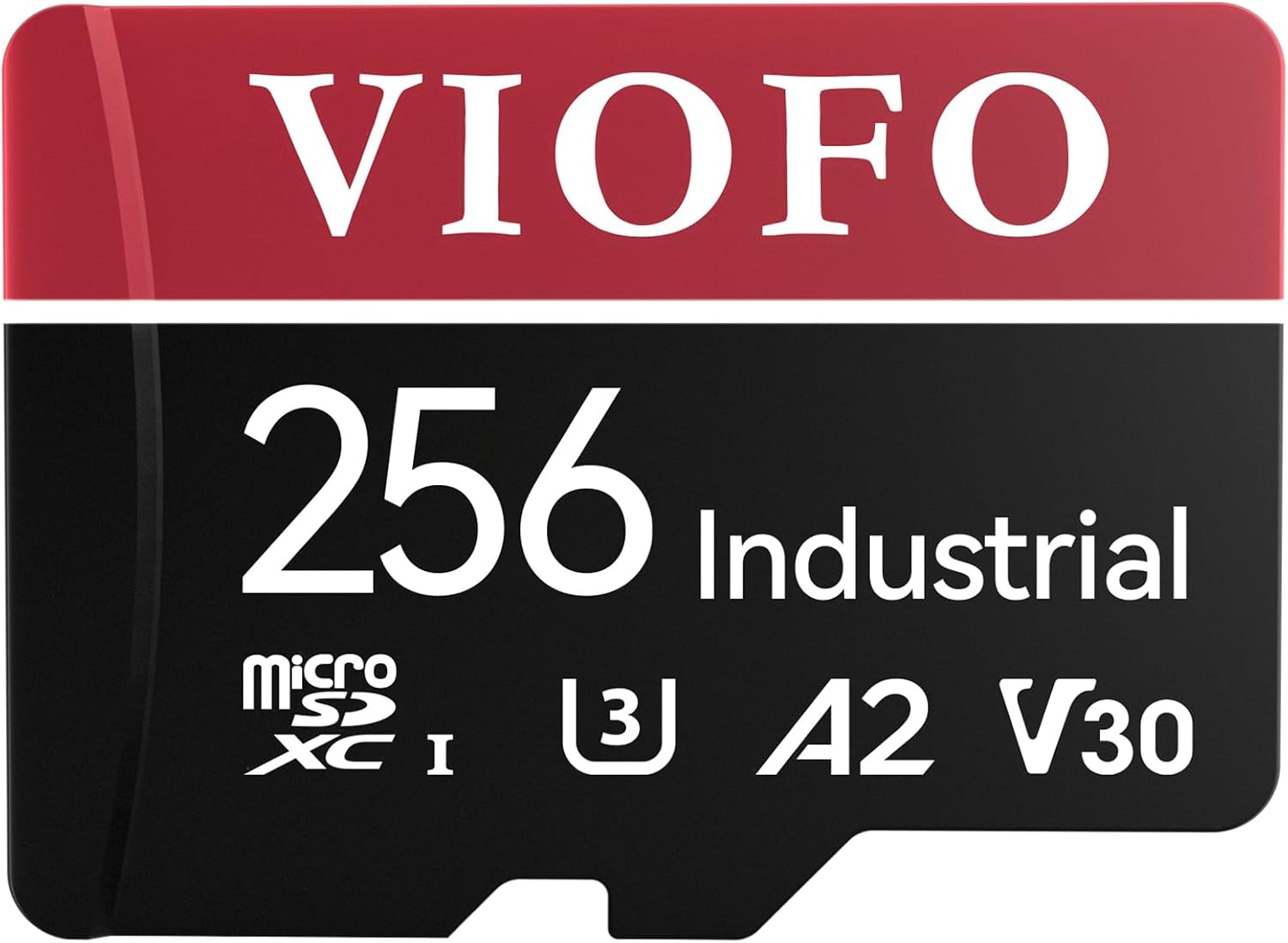
The VIOFO 256GB Industrial Grade microSDXC Card is built to be the part that does not quit. It is a high-endurance memory card rated U3, A2, and V30, it ships preformatted with a full-size SD adapter, and it sells for around $85. VIOFO also makes the dash cams, so this card is tuned for its own A229 Pro, A119, and similar models.
I went through the setup, capacity, heat protection, and the honest speed trade-offs to see whether the “industrial grade” label actually means anything. Here is what I found, and the one thing about capacity that surprised me.
What I Liked
The VIOFO 256GB Industrial microSD Card is designed for one job, and it does that job well. These are the strengths that stood out.
Endurance Built for Constant Overwriting
This is where the “industrial grade” part earns its name. A dash cam kills normal cards because it never stops, overwriting old footage millions of write cycles all day, every day. This high-endurance card is rated for exactly that continuous write-and-erase abuse, which is a completely different kind of wear than a card in your phone ever sees.
The regular high-speed cards you use in a phone can quietly give up under that load, and you do not find out until you need the footage. This one is made to survive it.
True Plug-and-Play VIOFO Compatibility
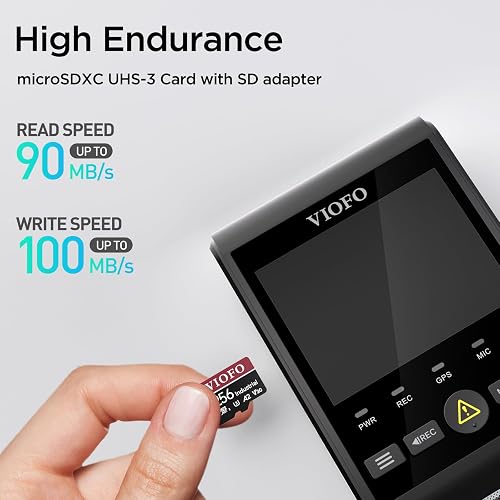
Because VIOFO makes both the card and the cameras, compatibility guesswork disappears. Drop it into an A229 Pro, an A119, or most other VIOFO dashcams and it is recognized immediately, with no hunting for a third-party card that plays nice with the firmware.
It ships preformatted, so it works the moment you insert it. Even if you do format it inside the camera, that takes about 3 seconds.
Smooth 4K Recording With No Dropped Frames
The speed ratings here are the ones that matter for video. The U3, A2, and V30 marks mean this microSDXC card can handle the high bitrate of 2K and 4K recording without stuttering or dropping frames.
Read speed goes up to 100MB/s, so pulling Ultra HD 4K clips onto a laptop later is quick instead of a waiting game. If you run a sharp 4K cam, this is the kind of card that keeps up with it.
Tough Against Heat, Water, and Magnets
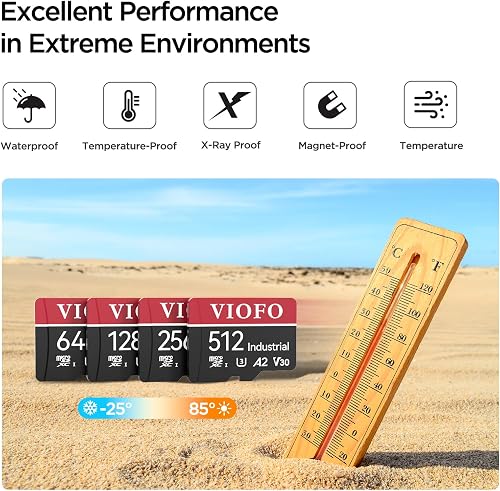
A memory card lives in a brutal spot on your windshield. This one is waterproof, temperature resistant, anti-X-ray, and anti-magnetic, and the protection that matters most in a car is heat.
A parked car in summer can hit 130 degrees inside, the exact condition that makes ordinary cards throw a “memory card error.” In hot climates like Arizona, owners report this card just keeps recording with no glitches or corrupted files. When it comes time to pull that footage, a hub with a built-in SD and microSD reader like the Minthouz USB C Docking Station makes copying clips to a laptop straightforward.
256GB Hits the Stability Sweet Spot
Here is the part that surprised me: bigger is not always better. On a dash cam, more capacity means the loop takes longer to fill, so each memory sector gets written to less often, which actually extends the life of the card.
But a lot of dash cams struggle with the file system on 512GB cards and can end up freezing or corrupting footage. The 256GB card is the stability sweet spot, with plenty of room for a front-and-rear setup without the risk of the largest sizes.
What Needs Improvement
No card is perfect, and there are a few honest trade-offs worth knowing before you buy.
Write Speed Trails the Read Speed
The one honest trade-off here is the write speed. That headline 100MB/s figure is the read speed, while the write speed sits lower, at around 80MB/s.
For loop recording this is plenty, and it never held back my footage. But if you are the type who constantly dumps and recopies huge 4K files to a computer, a portable SSD like the ORICO K20 1TB SSD is the better tool for that specific job.
It Costs More Than a Standard Card
You pay a premium for this endurance. This industrial grade microSD card runs noticeably more than a standard consumer card of the same capacity, and several owners flag the price as their main complaint.
That gap buys you continuous-write durability and heat resistance, not raw megabytes. If you do not need those things, the extra cost is hard to justify.
Rare Reports of Cards Corrupting
Even a high-endurance card is not fully immune to the harsh dash cam environment. A small number of owners report a card corrupting or the camera repeatedly asking to reformat, sometimes needing a hard format from a computer.
These reports are the exception rather than the rule, and VIOFO backs the card with a one-year warranty. Still, the honest takeaway is to keep backing up important clips and reformat the card in-camera every so often.
How It Compares
The high-endurance SD card market is crowded, and not every card that says “endurance” is actually recommended for a modern 4K dash cam.
SanDisk Max Endurance is the main third-party card VIOFO itself endorses. Based on user feedback and in-house testing, retailers like Dashcam-Shop recommend only VIOFO original cards and the SanDisk Max Endurance line for long lifespan. It is the safest non-VIOFO pick if you want a proven alternative.
SanDisk High Endurance is the naming trap to watch. Despite the similar name, VIOFO recommends the Max Endurance and specifically not the cheaper High Endurance for its newer cameras, so read the label carefully before you assume compatibility.
Samsung PRO Endurance is the other well-known high-endurance card, and it holds up fine for many dashcams. Just note that Samsung’s cheaper EVO Plus lands on VIOFO’s not-recommended list, and budget brands like KEXIN will physically work but tend to burn out fast under constant writing.
Within VIOFO’s own lineup, the 128GB card is a solid pick for a single-channel setup, while the 512GB card tempts you with space but is where some cameras start to freeze or corrupt footage. The 256GB card is the balance point, and it is the right size if you are pairing it with a multi-channel rig like the iiwey N5 4-Channel Dash Cam or a compact model such as the E-YEEGER S50 Dash Cam.
At around $85, the VIOFO 256GB Industrial card costs a little more than the SanDisk equivalent, but the guaranteed compatibility with your own camera is what you are paying for.
Final Verdict
The VIOFO 256GB Industrial Grade microSDXC Card earns a 4.6 out of 5. It does the one thing a dash cam card has to do, which is keep recording reliably when the conditions are working against it.
The high-endurance build, guaranteed VIOFO compatibility, and heat resistance are the real wins, and 256GB turned out to be the smart capacity choice rather than the biggest one. The slower 80MB/s write speed and the price premium are fair trade-offs, and the rare corruption reports are worth a periodic backup habit.
If the SD card is the weakest link in your dash cam setup, this is a sensible way to fix it. You are paying for peace of mind that the footage is actually there when you need it, and it is backed by a one-year warranty. For any VIOFO owner recording in 4K, it is an easy recommendation.
Specifications
| additional_features | Lightweight |
| brand | VIOFO |
| color | VIOFO 256GB microSD Card |
| compatible_devices | Camera |
| flash_memory_type | Micro SD |
| flash_memory_video_speed_class | V30 |
| hardware_connectivity | microSDXC |
| item_dimensions_l_x_w | 0.59"L x 0.43"W |
| item_weight | 0.5 g |
| manufacturer | VIOFO |
| media_speed | 80 MB per second |
| memory_storage_capacity | 256 GB |
| mfr_part_number | VIOFO_256GB_Card |
| model_number | VIOFO_256GB_Card |
| number_of_items | 1 |
| read_speed | 100 megabytes_per_second |
| secure_digital_association_speed_class | Class 10 |
| unit_count | 1 Count |
| warranty_description | 1 |
| warranty_type | Limited |
Frequently Asked Questions
Is the VIOFO 256GB Industrial microSD card the best card for a VIOFO dash cam?
For a VIOFO dash cam it is one of the safest choices, because VIOFO makes both the card and the cameras so compatibility is guaranteed. It is a high-endurance card rated U3, A2, and V30, built for the constant overwriting that wears out ordinary cards. The main third-party alternative VIOFO endorses is the SanDisk Max Endurance.
Is the VIOFO 256GB card enough for a 4K dash cam?
Yes. 256GB gives plenty of buffer for 4K loop recording, even on a 2 or 3 channel front-and-rear setup that fills small cards in hours. A larger loop also means each memory sector is written to less often, which helps extend the life of the card.
How long can the VIOFO 256GB microSD card record before it loops?
It depends on your resolution and how many channels you run, but 256GB typically holds many hours of 4K footage before the loop starts overwriting the oldest clips. Multi-channel setups fill faster than a single front camera. For most drivers it is more than a full day of driving before older footage is replaced.
Is the VIOFO 256GB Industrial card worth paying a premium over a SanDisk card?
If you own a VIOFO camera, the premium mostly buys guaranteed compatibility and continuous-write endurance rather than raw speed. The SanDisk Max Endurance is a proven and often cheaper alternative that VIOFO also recommends. If you want zero compatibility guesswork, the VIOFO card is worth it.
How is the VIOFO Industrial card different from the SanDisk High Endurance card?
Both target continuous recording, but VIOFO specifically recommends the SanDisk Max Endurance and not the cheaper SanDisk High Endurance for its newer 4K cameras. The VIOFO card is tuned for its own dashcams, so it avoids the firmware compatibility issues some third-party cards hit.
Does the VIOFO 256GB microSD card come with an SD adapter?
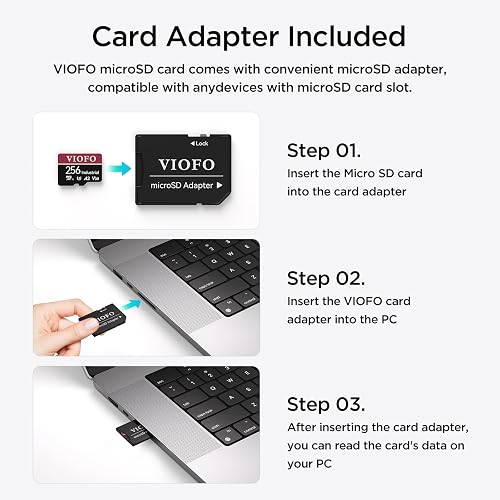
Yes. It ships with a full-size SD adapter and a protective case, so you can pull the card and read your footage on a laptop. The card also comes preformatted, and reformatting it inside the camera takes about 3 seconds.
Will the VIOFO 256GB Industrial card work in a non-VIOFO dash cam or security camera?
Yes. It is a standard microSDXC card, so it fits any device with a microSD slot, including other dash cams and security cameras. The high-endurance design is a good match for any camera that records continuously, though you should confirm your device supports 256GB capacity.
Ready to Buy?
VIOFO 256GB Industrial Grade microSDXC Card delivers on its promises. If it fits your needs, it's a solid choice you won't regret.
Check Price on Amazon Founder & Product Reviewer at TheReviewRewind
Daniel has tested 400+ products across 20+ categories through hands-on, real-world testing. Every review includes video documentation and standardized scoring criteria. His reviews appear as Amazon shoppable videos and here on TheReviewRewind.
We earn a commission if you make a purchase, at no extra cost to you. This does not influence our ratings or recommendations. Full disclosure
Looking for more options? See all our Computers reviews.
Related Reviews