SmallRig Luna Ultra ND & CPL Filter Kit Review: A Sun Test


SmallRig Luna Ultra ND & CPL Filter Kit Review: A Sun Test
SmallRig Luna Ultra ND & CPL Filter Kit
A well-built, genuinely usable magnetic filter set that fixes the Luna Ultra's blown-out, choppy bright-sun footage and kills glare off water and glass. The snap-on mount and sharp, cast-free glass are the highlights. The main catch is big jumps between the three ND strengths, and you can't stack filters.
Buy on AmazonWhat We Liked
- The Magnetic Mount Makes Swaps Genuinely Fast
- Three ND Strengths Cover Most Bright-Sun Shooting
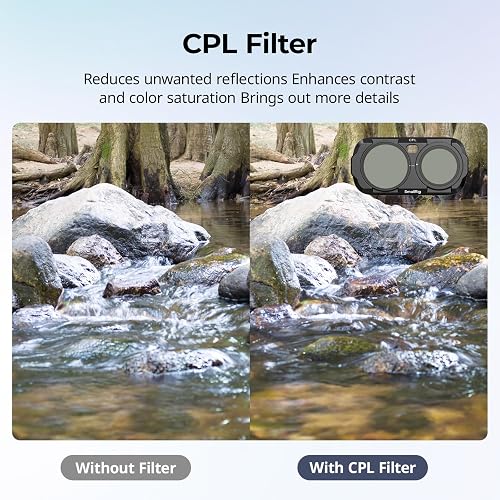
- The CPL Cuts Glare and Deepens Skies on Both Lenses
- Sharp Optical Glass With No Obvious Color Cast
- A Complete Kit: Case, Cloth, and Dual-Lens Coverage
What Could Be Better
- There Are Big Jumps Between the ND Strengths
- You Cannot Stack Filters to Combine Effects
- Fiddly to Remove, and Fingerprints Show Easily
- Setup Caveats and a Case That Feels Basic
How we test: Every product is used in real conditions and evaluated using our standardized scoring criteria. Read our full review methodology.
If you have taken your Insta360 Luna Ultra out in bright sun, you have probably run into this: the footage comes out blown out and washed, or it picks up a choppy, unnatural motion. And anywhere near water or glass, you get harsh reflections you cannot do anything about. That is exactly the gap this accessory is built to fill.
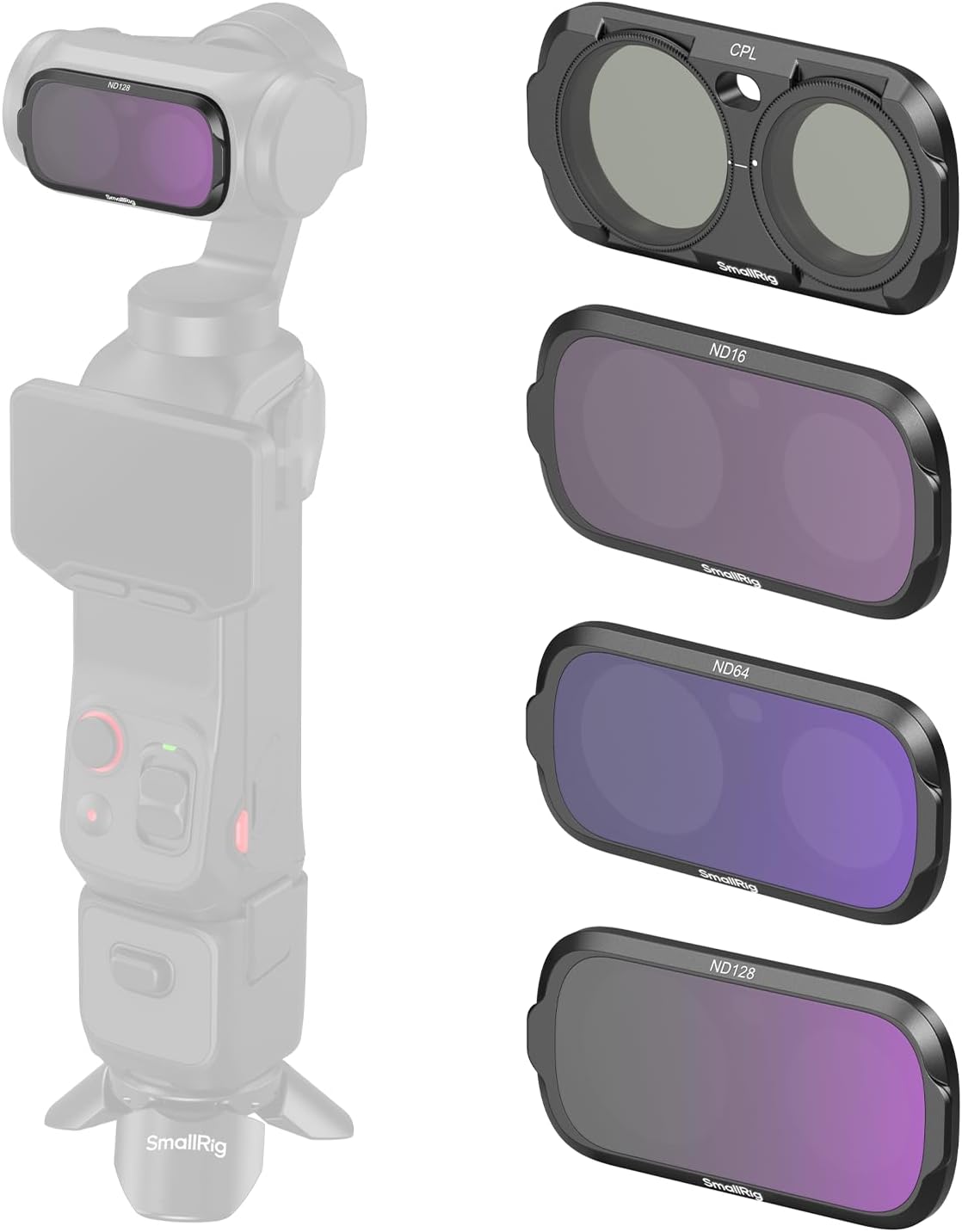
The SmallRig ND & CPL Filter Kit for the Insta360 Luna Ultra (model 6688) is a four-piece set of magnetic filters made from multi-coated optical glass. I ran it through a real sun test on the Luna Ultra: mounting each filter, dialing the shutter back down to 1/60 for natural motion blur, and doing a hand-wave test so the difference in that motion is easy to see. For a sub-$40 filter kit, the questions are simple. Does it actually fix the bright-sun problem, and is it easy enough to live with in the field?
The short version is that it does the job and the magnetic mount is the part that makes it genuinely usable outdoors. There are a couple of honest caveats about the ND spacing and stacking worth knowing first, though.
What You Get and How It Mounts
Inside the case you get a neutral-density trio of ND16, ND64, and ND128 plus one CPL circular polarizer, along with a cleaning cloth. The filters sit in a foam-lined case so nothing rattles or gets scratched between shoots. Each filter is a single aluminum-alloy frame rather than a pair of separate rings, and it covers both of the Luna Ultra’s lenses at once, so one filter works whether you are shooting on the 20mm wide lens or zoomed into the 60mm telephoto.
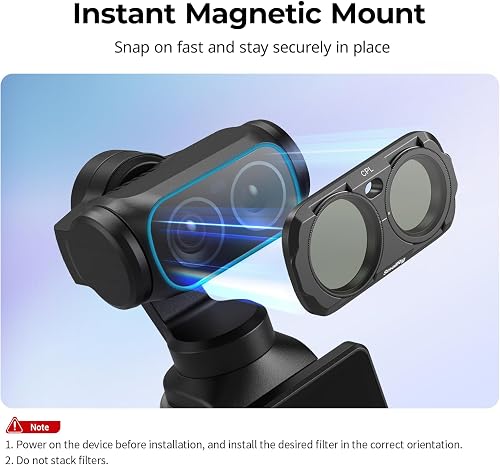
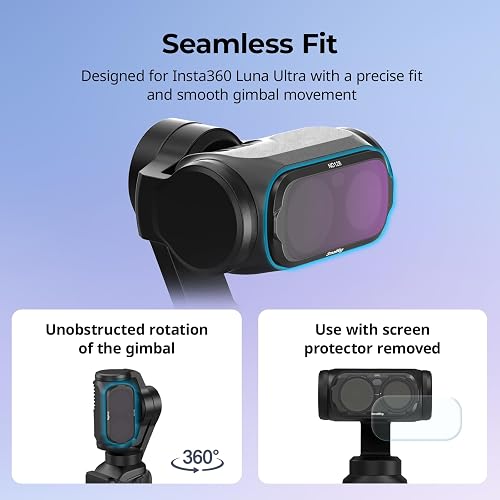
Mounting could not be much simpler. There are no threads to line up: you hold a filter to the front of the camera and the magnetism snaps it into place, and it pulls straight back off the same way. The filters sit flush across the front so they do not foul the gimbal as it rotates. SmallRig does list a short routine to follow, though. Power the camera on before attaching a filter, seat it in the correct orientation using the alignment dots, and use the kit with the lens screen protector removed. The one firm rule is that you do not stack these filters, so it is always one at a time.
What I Liked
For a camera accessory that costs a fraction of what the premium filter brands charge, the SmallRig kit gets the important things right. Here is what stood out after mounting the filters on the Luna Ultra and shooting with them in the sun.
The Magnetic Mount Makes Swaps Genuinely Fast
The best thing about this kit is the magnetic mount. There is no screwing anything in or lining up threads: you hold the filter to the front of the camera and it snaps into place, then pulls right off the same way. When the light changes and you need to move from the ND16 to the ND64, you can do it in a couple of seconds without stopping the shoot. The filters also sit flush across the front, so they never get in the way of the gimbal as it moves. That is the detail that makes this set actually usable out in the field rather than a fussy thing you leave in the bag.
Three ND Strengths Cover Most Bright-Sun Shooting
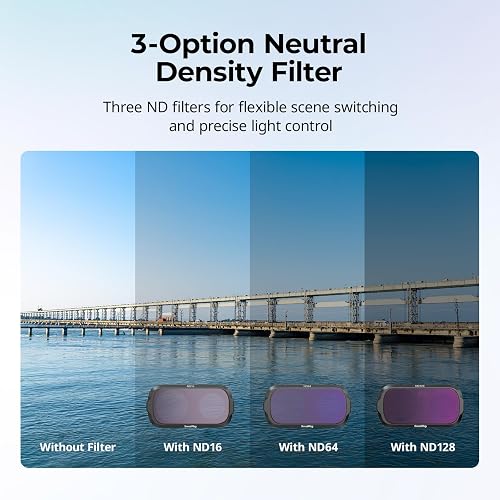
A neutral-density filter is basically sunglasses for your camera: it cuts the light coming in so you can keep the shutter slow enough for natural motion blur instead of that jittery, over-cranked look. The ND16 cuts about four stops and is the everyday filter that honestly lives on the camera most of the time, good for general bright conditions and slightly overcast days. The ND64 cuts about six stops for harsh midday sun, beaches, and snow, and it is the one you reach for when you want silky water or drifting clouds. The ND128 cuts about seven stops for extreme daylight long exposures. In my sun test, dropping an ND on let me push the shutter back to 1/60 and recover smooth, natural movement.
The CPL Cuts Glare and Deepens Skies on Both Lenses
The CPL is a different animal from the ND filters. Rather than darkening the frame, this circular polarizer cuts reflections off non-metallic surfaces, so you can see down into water or through a store window instead of a mirror of glare. It also deepens a blue sky, makes clouds pop, and pulls out texture that would otherwise look flat. Because the effect depends on angle, each of the two lens openings has its own rotating dial with a white alignment dot, so you can tune the polarization for both the wide and telephoto lenses. I confirmed it working even at 3x zoom onto a pool.
Sharp Optical Glass With No Obvious Color Cast
You are putting a piece of glass in front of a genuinely nice camera lens, and cheap glass would undo the quality you paid for. These are optical glass with multi-layer coatings, and in practice the image stayed sharp right to the edges with no obvious color cast, even on the stronger ND128. That lines up with independent comparison tests, which pegged SmallRig’s glass as only slightly cool and easy to correct in post, rather than the heavy warm shift some budget filter brands introduce.
A Complete Kit: Case, Cloth, and Dual-Lens Coverage
You get all four filters, a foam-lined case so nothing rattles or gets scratched, and a cleaning cloth. That cloth matters more than it sounds: magnetic filters pick up fingerprints easily, and in my testing a smudge that looked like it would ruin a shot wiped away in one pass. Having the cloth in the case means you can keep the glass clean between takes without carrying extra gear, and the single-plate design covering both lenses keeps the whole thing compact.
What Needs Improvement
None of these are dealbreakers on a sub-$40 filter kit, but a few points are worth setting expectations around before you buy.
There Are Big Jumps Between the ND Strengths
The clearest limitation is the spacing. The kit runs ND16, ND64, then ND128, which is roughly four, six, and seven stops. That is a wide gap, and it skips the lighter and in-between densities you often want. There is no ND8 for softer, overcast days and no ND32 for ordinary bright daylight, which is the strength general ND guides point to most often. In practice the ND16 covers a lot and the ND64 handles harsh light, but if your conditions sit between the two you are left choosing the closer-than-ideal option rather than dialing it in.
You Cannot Stack Filters to Combine Effects
SmallRig is explicit that filter stacking is not supported on this kit, so it is one filter at a time. You cannot, for example, put the CPL on top of an ND to kill glare and control exposure in the same shot. Some competing magnetic sets, including Freewell’s, do allow compatible filters to stack for stronger reduction or combined effects, so if layering is part of your workflow this kit will feel limiting.
Fiddly to Remove, and Fingerprints Show Easily
The magnets hold firmly, which is good, but it means pulling a filter off takes a deliberate pinch of the edges, and it is easy to end up with a thumb on the glass. Since the filters also attract fingerprints readily, you will be reaching for the cleaning cloth often. SmallRig’s own note puts it plainly that the set is solid but not indestructible, so the CPL in particular wants gentle handling rather than being jammed in a pocket.
Setup Caveats and a Case That Feels Basic
There is a small routine to respect: power the camera on before mounting a filter, seat it in the correct orientation, and note that the filter is meant to be used with the lens screen protector removed. Get the order wrong and alignment can suffer. The storage case does its job of keeping the glass safe, but the foam-lined build is functional rather than premium, which stands out a little on an otherwise nicely finished set.
How It Compares
The most useful comparisons start inside SmallRig’s own lineup, because this fixed-ND kit is one of several filter options for the Luna Ultra. If you would rather not juggle three separate ND plates, SmallRig also sells a variable-ND version (models 6985 through 6987) that swaps the fixed trio for a single VND dial running ND2 to ND32, optionally with a 1/4 Black Mist diffusion filter added. A variable ND is more convenient for fast-changing light, but comparison tests consistently show fixed glass holds color a little better, so this kit trades convenience for accuracy. At the other end, the step-up SmallRig 6687 packs six ND strengths from ND8 to ND256 plus a CPL and Black Mist for around $51, which directly answers the strength-gap complaint if you shoot in widely varying conditions.
Against the main third-party rival, Freewell, the picture is close. Freewell’s Standard Day kit covers ND8, ND16, ND32, and ND64 for about $60, carries a lifetime warranty, and notably lets you stack compatible filters, which this SmallRig set does not. SmallRig counters with a lower price and the extra reach of the ND128 for deep daylight long exposures. NEEWER and K&F Concept round out the budget field: in a side-by-side community test, NEEWER stayed closest to the bare lens with the nicest CPL rotation feel, K&F ran noticeably warm with heavier skin-tone shifts, and SmallRig landed in the middle, slightly cool but easily corrected. PolarPro’s Cinema Series sits above all of them on optics and price if money is no object.
It is also worth clearing up what this kit is and is not. As a photographic filter set, these are neutral-density and polarizing filters for exposure and glare in both video and photography, not a UV filter that blocks ultraviolet light and not a lens guard, and they attach magnetically rather than threading on like filters for a mirrorless camera or a phone. Unlike the single-lens filters many DJI Osmo Pocket owners use, each SmallRig plate covers both of the Luna Ultra’s lenses at once, which is the right design for a dual-lens vlog camera. If you only ever film indoors, none of these kits will do much for you, because there simply is not enough light to need strong ND.
Final Verdict
The SmallRig ND & CPL Filter Kit for the Insta360 Luna Ultra earns a 4.4 out of 5 from me. It is a complete, well-built working set that does exactly what an outdoor shooter needs: it tames blown-out highlights, brings back natural motion blur, and the CPL kills the reflections off water and glass that you otherwise cannot fix.
The magnetic mount is the real selling point, turning a filter change into a two-second snap-on that never fights the gimbal, and the optical glass keeps the Luna Ultra’s footage sharp and cast-free. The honest limits are about flexibility rather than quality. The jumps between ND16, ND64, and ND128 are wide enough that you will occasionally wish for an in-between strength, and you cannot stack filters to combine effects. Fingerprints and a merely functional case round out the nitpicks.
Early buyers seem to agree: on Amazon the kit holds a 4.6 out of 5, and for the money you are getting all four filters for a fraction of what premium brands charge for a single one. If you own a Luna Ultra and you shoot outside in bright light, water, or travel settings, this kit is an easy recommendation. If you mostly film indoors, or you specifically need fine-grained ND steps and filter stacking, look at SmallRig’s variable-ND or eight-piece kits or a stackable rival instead.
Specifications
| Brand | SMALLRIG |
| Model | 6688 |
| Filter Set | ND16, ND64, ND128 & CPL |
| Pieces in Kit | 4 magnetic filters + cleaning cloth |
| Mount Type | Magnetic snap-on |
| Compatible Camera | Insta360 Luna Ultra |
| Material | Aluminum frame, multi-coated optical glass |
| Filter Effects | Neutral density + circular polarizer |
| Color | Black |
| Item Weight | 57 g |
| Warranty | 2 years manufacturer |
| Filter Stacking | Not supported |
| Best Sellers Rank | #16 in Camera Lens Filter Sets |
Frequently Asked Questions
Which filters come in the SmallRig Luna Ultra ND CPL kit (model 6688)?
The kit includes four magnetic filters for the Insta360 Luna Ultra: three neutral-density filters (ND16, ND64, and ND128) plus one CPL circular polarizer, along with a foam-lined storage case and a cleaning cloth. Each filter is a single plate that covers both of the camera's lenses at once.
Do you really need ND filters on the Insta360 Luna Ultra?
If you shoot outdoors in bright light and care about natural motion, yes. Without an ND filter the camera cranks the shutter up to avoid overexposing, which creates a choppy, jittery look. An ND cuts the light so you can slow the shutter back to roughly double your frame rate for smooth, cinematic motion blur. For casual indoor vlogging, they matter much less.
Which ND strength should I use, the ND16, ND64, or ND128?
The ND16 (about four stops) is the everyday filter for general bright and lightly overcast conditions, and it tends to live on the camera. The ND64 (about six stops) is for harsh midday sun, beaches, and snow, and for silky-water looks. The ND128 (about seven stops) is the strongest, for extreme daylight long exposures. The kit skips ND8 and ND32, so very soft or ordinary bright days fall between strengths.
Can you stack the SmallRig Luna Ultra filters?
No. SmallRig states that filter stacking is not supported on this kit, so you use one filter at a time and cannot combine, for example, the CPL with an ND in a single shot. If stacking matters to you, a kit like Freewell's that allows it, or SmallRig's larger eight-piece set, is a better fit.
How do the filters attach, and do they get in the way of the gimbal?
They attach magnetically. You hold a filter to the front of the camera and it snaps on, then pulls off the same way, with no threads to line up. The filters sit flush across the front so they do not obstruct the gimbal as it moves. Just power the camera on first, align the filter correctly, and use it with the lens screen protector removed.
Does the SmallRig filter kit hurt image quality or add a color cast?
In testing the image stayed sharp to the edges with no obvious color cast, even on the ND128, thanks to the multi-coated optical glass. Independent comparisons found SmallRig's glass only slightly cool, which is easy to correct in post, rather than the heavy warm shift some budget filters add.
Is the SmallRig Luna Ultra ND CPL filter kit worth it?
For outdoor Luna Ultra shooters, yes. At roughly $30 to $40 you get all four filters for less than a single premium-brand filter, the magnetic mount makes swaps genuinely fast, and the glass keeps footage clean. The main trade-offs are the wide gaps between ND strengths and the lack of filter stacking.
Ready to Buy?
SmallRig Luna Ultra ND & CPL Filter Kit delivers on its promises. If it fits your needs, it's a solid choice you won't regret.
Check Price on Amazon Founder & Product Reviewer at TheReviewRewind
Daniel has tested 400+ products across 20+ categories through hands-on, real-world testing. Every review includes video documentation and standardized scoring criteria. His reviews appear as Amazon shoppable videos and here on TheReviewRewind.
We earn a commission if you make a purchase, at no extra cost to you. This does not influence our ratings or recommendations. Full disclosure
Looking for more options? See all our Electronics reviews.
Related Reviews